
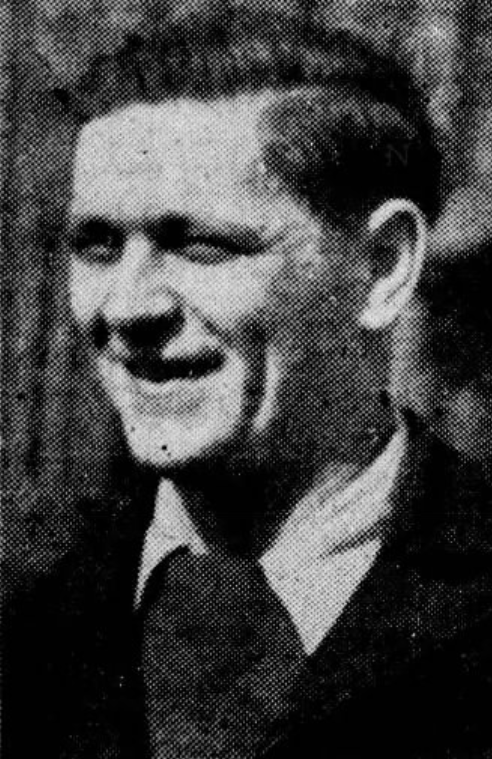
Charlie Hackett was an unlikely major league manager, but a bright and quick study who eventually won multiple pennants in good minor leagues. Equally important, he managed African American stars George Stovey, Moses Fleetwood Walker, and Robert Higgins during his days managing in the International Association.
There is no record of his actually playing amateur or professional baseball, but he managed two franchises in the major leagues. Hackett helmed a struggling Cleveland Blues team in 1884 and, despite a poor record, was given a shot with Brooklyn in the American Association the next year. According to his obit, he was fired because he objected to having a player on his roster who was a barkeeper but the people who ran the club saw fit to get rid of Hackett instead. Contemporary articles suggest that management was dissatisfied with inconsistent play and Hackett, reading the tea leaves, decided to resign.
Not that there wasn’t something that bothered Hackett, according to the Brooklyn Eagle.
“Manager Hackett, of the Brooklyns, has tendered his resignation, to take effect tomorrow. He is dissatisfied with the treatment he received from the club officials and players and he leaves to accept an offer elsewhere.”
Adding, “Mr. Hackett never said a word of any such treatment yesterday to the Eagle reporter. What does it mean? Will Mr. Hackett explain?”
“Sports and Pastimes,” Brooklyn Daily Eagle, June 12, 1885: 5.
Hackett had a rather interesting life. Charles Michael Hackett arrived October 6, 1854 in Lee, Massachusetts to Irish imports James and Abbie (Ahern) Hackett. Father James worked as a railroad laborer while Abbie raised six children. By his teens, Charles (sometimes called “Mike”) was working in a printing office, eventually becoming a printer for the Holyoke Telegraph. He was elected Holyoke City Messenger in 1880 and re-elected in 1883. At some point along the way, Hackett got involved in local baseball, then spent the next several years managing in the major and minor leagues.
Hackett was involved with amateur Holyoke baseball in the early 1880s, eventually becoming the secretary of the Holyoke Association – a collection of directors and investors in local baseball. In 1883, he was put in charge of a Holyoke amateur nine in the Massachusetts Association and used that experience to try and get a paid job managing a club. He concurrently chased after the Cincinnati Unions job, a minor league job in Quincy, and the Cleveland Blues gig that came available after Cleveland’s first competitive National League season. Cleveland’s manager, Frank Bancroft, jumped to Providence for 1884 and Cleveland needed a manager.
A correspondent to the New York Clipper gave Hackett credit for helping develop some of Holyoke’s most famous players, including Roger Connor and Mickey Welch on the 1879 Holyoke Shamrocks. This wasn’t true and the Clipper corrected the correspondent two weeks later. Apparently, the Cleveland directors bought the story, however, and hired Hackett to manage the Blues.
As to Hackett’s professional experience prior to taking on the Cleveland Blues, Hackett struggled running the Holyoke nine and he resigned at the end of June, just six weeks into the 1883 season.
That said, Cincinnati offered Hackett $1600 and 10% of the club’s profits to manage the Outlaw Reds – at least that’s what Hackett told people. And, Quincy sent a contract that Hackett accepted. However, he held out hope that he would work something out with an existing major league team and Cleveland, despite Hackett’s limited experience in professional baseball, was handed the job.
Quincy didn’t want to lose without putting up a fight. According to a note in the Quincy Journal, “The everlasting facts of this matter are these: Mr. Hackett offered to come to Quincy and manage the Quincy Club for a certain price, naming it, if he could be permitted to bring certain players with him, who, he claimed, he could hire cheaper than anyone else could.” That offer was accepted by Quincy in writing and league rules suggested that Quincy could keep Hackett “in spite of himself.”
Many teams and leagues took issue with Hackett’s looking for other jobs and members of other leagues provided opinions. “If Hackett has signed with Cleveland, after making an agreement to sign with Quincy, he out to be expelled for it,” explained the secretary of the Northwestern League. “I have been instructed… not to send out any more notices of agreements, but to announce them as contracts, for the reason… that the Union clubs do not recognize agreements, and do recognize contracts.” Even the National League and American Association announced any agreement as a contract to add teeth to potential contract shopper efforts.
Eventually, Cleveland outbid both Cincinnati and Quincy, and Quincy chose to give up the chase, signing a man named Brackett instead…
Meanwhile – nine players from the 1883 Cleveland Blues landed in the Union Association for 1884, depleting the talent of the team that Hackett inherited. Among those who skipped the Blues for Union Association paychecks were Hugh Daily, Fred Dunlop, Jack Glasscock, George Bradley, Jim McCormick, and Fatty Briody. Predictably, the Blues were not competitive in 1884, finishing 35-77-1 and in seventh place, 49 games behind Providence – who had signed the manager of the 1883 Blues for their pennant winning team.
After the 1884 season, Cleveland folded. Brooklyn was trying to keep it own place and not have the New York Metropolitans move into its borough so it quickly got to work – starting with hiring Charlie Hackett to manage the team. And, to his credit, Hackett met personally with a number of the former Blues players and other potential new talent to sign them to contracts for 1885, hoping to avoid the scramble for talent he experienced in his first MLB spring.
For the last twenty days he has been traveling from place to place, where the players lived, and has secured pledges from seven to play with the Brooklyn Club of 1885. Every man has also received advanced money. Each has agreed to sign a contract at the end of the ten days that must elapse between release and contract, under the National Agreement.
“The Cleveland Club Retires,” St. Louis Globe-Democrat, January 6, 1885: 8.
Among the former Blues that joined Brooklyn, Hackett brought with him 1B Bill Phillips, SS Germany Smith, OF Pete Hotaling, and P John Harkins. However, that team underperformed and team directors wanted to make changes. Hackett resigned, leaving the club with a 15 – 22 record. Jack Cassidy was made captain and ran the team, though Charles Byrne himself was now credited as having managed the team the rest of the way – getting all of one game closer to .500 before the season ended. With that, Hackett’s major league career ended.
Hackett wasn’t done with managing, however. He took over the Newark Domestics of the Eastern League for the remainder of the 1885 season. In 1886, Newark took on the nickname of “The Little Giants” and won the 1886 Eastern League pennant. Newark moved to the International Association for 1887. Hackett turned over nearly the complete roster heading into the season.
The Newark team featured pitcher George Stovey and catcher Fleet Walker, two African American ballplayers. In fact, the two paired as the league’s best battery in 1887. That said, despite playing really well throughout the season, the team didn’t fare as well at the gate. To help with the revenue, they played a number of exhibitions, including at least two games against the Cuban Giants (but were handled easily by the Giants, though). Cap Anson’s overt racism wouldn’t play an exhibition game against Newark unless both Stovey and Walker sat the game out. As such, the International Association outlawed giving contracts to African American players once the season was complete – though it allowed those who already had contracts to remain in the association. The few players who benefited from having existing contracts included Fleet Walker, as well as Frank Grant and Robert Higgins in Syracuse.
When the International Association threatened to kick Newark out of the league (and it did) after the 1887 season, Hackett moved to the IA’s Syracuse Stars. With Walker and Robert Higgins, an excellent African American pitcher (and many other major league quality players), Hackett won another pennant. (This team also featured one of my favorite baseball players, Mox McQuery, who captained the team from first base.)

There’s not enough information out there to suggest just how progressive Hackett was, even having managed three of the earliest African-American baseball players. He was certainly an opportunist but, to be fair, over time he became a decent judge of talent and played the people who gave him the best chance to win. He was willing to play teams like the Cuban Giants in exhibitions. Given the era and the attitudes of many of the leaders of organized baseball, he was way more progressive than his brethren.
As to his being a good judge of talent, Hackett was a fan of local Holyoke paper millworker, Tommy Tucker. He brought Tucker with him to Newark where Tucker eventually earned a chance with Baltimore in 1887. Tucker went on to have a thirteen-year career in the big leagues. Another young player he identified that turned out to be pretty good was a Newark area pitcher named Robert Miller, who made it to the majors by 1890.
As a manager, Hackett was an active and nervous sort. He frequently paced up and down the base line in front of his team’s bench – fiddling with or chewing on his thick mustache. And, Hackett was fastidious about things – he would have the bat boy align the bats just so, making it easier for his players to select a favorite club. Knowing this, one of his pitchers, Bill Bishop would occasionally mess up the order and layout of the bats, just to get under his manager’s skin.
Anyway, after this run of success Hackett hoped to get another shot at a major league job, but none were forthcoming despite a few inquiries and rumors. Instead, he partnered with M. F. Shea to create a new Holyoke-based clothing business, Shea and Hackett Co., in 1889 and retired from baseball.
However, an organization in the Western League that had spent thousands of dollars updating their team only to finish with disappointing records came calling. His two pennants earned Hackett a job with Kansas City in 1890, where he was signed for a $3500 contract with a $500 bonus if he finished higher than fifth place – a salary “as large as that of any manager in the country.” In addition to changing managers, Kansas City changed its nickname, returning to the Blues after a couple of seasons as the Cowboys.
Kansas City got off to a slow start, losing seven of eleven and went on a long road trip, playing fourteen games in more than three week period. The team didn’t play badly on the road – splitting the decisions – but the Blues management was unhappy with being near the bottom of the Western League standings. On June 1st, the Blues took a 2 – 1 lead after five innings in a game against Milwaukee. Hackett chose to replace his starting pitcher, Elmer Smith, with Frank Pears. Pears immediately gave up seven runs and the game was lost.
“He never seemed to take hold of the Kansas City club with spirit. Every base ball critic that has seen the club play has said that the playing that there was in the team was not being gotten out of it,. The men have not shown respect for him, and things have gone wrong generally.”
“Now Manager Manning,” Kansas City Star, June 2, 1890: 1.
Players and club directors, already not especially thrilled with Hackett’s decisions and management style, turned on Hackett. The team president, John W. Speas, was particularly upset with Hackett’s unwillingness to communicate with him about team matters, business expenditures – heck, anything really. It was as if Hackett was avoiding Speas. Having not heard from Hackett but by a single telegram in thirty days, Speas notified Hackett he was fired by letter. Hackett was responsible for a 12 – 15 record. The team was turned over to Jim Manning, who had been a successful manager in Kansas City previously and already had the respect of the local players and fans. Manning would guide the Blues to a pennant.
Hackett had a nervous breakdown of sorts. The Sporting Life reported, “He is a perfect wreck, mentally and physically. He is not able to move, and was carried from his room to a carriage and from the carriage to the cars. It is hoped by his physicians that he will recover, but it is doubtful. He is being well cared for on the journey.”
When Hackett returned to Holyoke, his professional baseball career was over.
1890 included a more positive event – his wedding to Georgiana Rousselle, a Holyoke store clerk. The marriage would produce no children. That said, Hackett spent the last eight years of his life in a weakened state, working as he could as a printer. In his obituary, the Holyoke Transcript wrote, “He got well enough to be about, walk and enjoy life in a most simple, quiet way. Further active work was out of the question. He submitted to the inevitable with all patience possible.”
Hackett passed to the next league on August 1, 1898 in Holyoke of some combination of paralysis and gangrene. He is buried in Calvary Cemetery there.
Sources:
1860, 1870 US Census
Massachusetts Marriage Records
Massachusetts Death Records
Image Source
Team Photo Image Source
“From the City of Churches,” The Sporting Life, June 17, 1885: 3.
“Sports and Pastimes,” Brooklyn Daily Eagle, June 12, 1885: 5.
“The Base Ball Meeting,” Holyoke Transcript, April 10, 1883; 4.
“Base Ball,” Holyoke Transcript, May 5, 1883: 6.
“Base Ball,” Holyoke Transcript, May 8, 1883: 1.
“Baseball,” New York Clipper, March 8, 1884: 2, 3.
“Base Ball Notes,” Cleveland Leader, February 29, 1884: 5.
“Base Ball,” Holyoke Transcript, June 30, 1883.
“Diamond Dust,” Cleveland Leader, March 8, 1884: 6.
“Base Ball Notes,” Cleveland Leader, March 7, 1884: 3.
“The Trouble Over Hackett,” Cleveland Leader, March 3, 1884: 3.
“Hackett Signs With the Cleveland League Club – Other Matters,” Cincinnati Enquirer, February 23, 1884: 2.
“Base Ball Gleanings,” Holyoke Transcript, March 27, 1884: 1.
“The Cleveland Club Retires,” St. Louis Globe-Democrat, January 6, 1885: 8.
“The International Leaders,” The Sporting Life, May 25, 1887: 1.
“Notes and Comments,” The Sporting Life, May 25, 1887: 10.
“The International League,” The Sporting Life, November 16, 1887: 1.
“Staunch Newark,” The Sporting Life, November 16, 1887: 1.
“Notes and Comments,” The Sporting Life, May 18, 1887: 9.
“Notes and Comments,” The Sporting Life, May 18, 1887: 9.
“Hackett’s Find,” The Sporting Life, April 19, 1890: 4.
“Salt City Sayings,” The Sporting Life, January 10, 1891: 6.
“Syracuse Scintillations,” The Sporting Life, November 14, 1888: 1.
“‘Charlie’ Hackett Retires,” Boston Globe, March 7, 1889: 8.
“Manager Hackett Signs with Kansas City,” Holyoke Transcript, November 1, 1889: 2.
“Holyoke,” Springfield (MA) Daily Republican, November 2, 1889: 6.
“Notes and Gossip,” The Sporting Life, April 26, 1890: 4.
“The Ball Team Home Again,” Kansas City Times, May 30, 1890: 3.
“A Sample of Each Kind,” Kansas City Star, June 2, 1890: 6.
“Kansas City Briefs,” The Sporting Life, June 7, 1890: 3.
“Mr. Hackett’s Condition,” Kansas City Times, July 2, 1890: 3.
“Ex-Manager Hackett’s Low Condition,” The Sporting Life, July 5, 1890: 1.
“Charles M. Hackett,” Holyoke Transcript, August 2, 1898: 6.


Say, hello! Leave a comment!!!