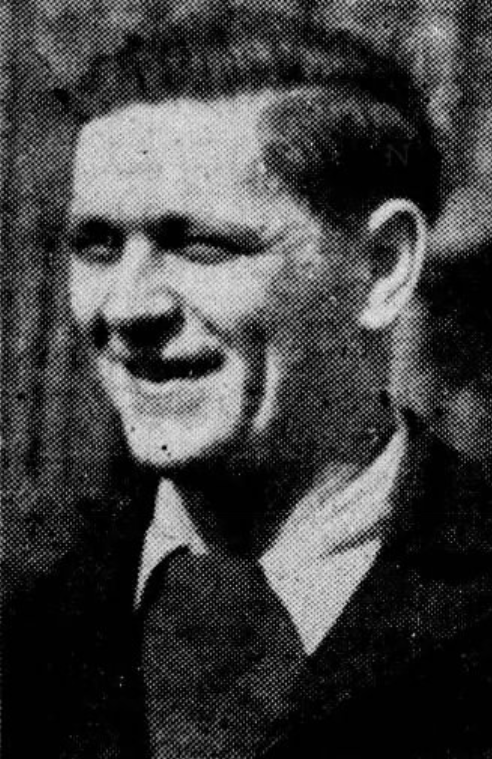
Eddie Klep was a white pitcher who made one appearance for the Cleveland Buckeyes of the Negro Leagues in 1946, making him the first player to integrate the Negro Leagues.
Born and raised in Erie, Pennsylvania, Klep faced the Buckeyes in an exhibition game in 1945 while pitching for a local Erie semi-pro club. After the game, he approached Ernest Wright, owner of the Buckeyes, and said that since the major leagues were now hiring African American players, maybe the Negro Leagues could hire white players. Klep told Wright that he enjoyed meeting and playing with the Buckeye players – and so Klep joined the team and pitched an exhibition game for Cleveland later that fall.
The following spring, Klep got a formal tryout with the Buckeyes – but apparently he didn’t get many chances to earn a spot on the team. Among the problems? In the spring training games of the south, southern cities wouldn’t let Klep play with his teammates – enforcing segregation laws in Birmingham, Alabama and some Florida cities (Deland and Jacksonville among them). His stop in Birmingham was especially strange; first Klep was told he couldn’t play. Then, he was told he couldn’t sit on the bench with his teammates. Then, he was removed from his seat in the stands and forced to sit in the Whites Only section. Ugh.
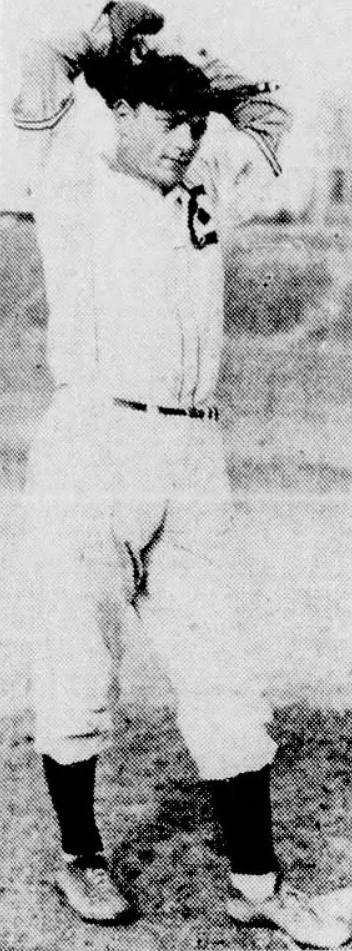
Making the Buckeyes for opening day, Klep appeared in one game as a reliever, got two outs to finish an inning, but gave up a couple of hits and a couple of runs. The lack of a box score or official scoresheet keeps Klep from having any official stats. Manager Quincy Troupe said that, while Klep showed promise during the spring, he needed more seasoning to play “…up to the fast Negro League standards…” – and with that, Cleveland released the young lefthander. Klep, for his part, was bitter and complained that he didn’t get a fair chance to prove his worth. He claimed he had only pitched seven live innings for the team since his signing.
Cleveland Call and Post reporter Cleveland Jackson wrote, “Braving the taunts, insults, and threats of an outraged southern public, Klep showed true blue and remained with his Negro teammates throughout the spring training in the deep south…” While not ready for big league baseball, Jackson added, “…in the hearts of every true American sportsman there is an indelible feeling that little Eddie Klep is ready for the highest award in sportsmanship. He is a great little guy.”
Klep was not very tall. He stood 5′ 7″ and weighed about 170 pounds.
Edward Joseph Klep was born October 12, 1918 to Konstanty (Gust) and Mary (Nitkowski or Nakoski) Klep in Erie. He was the third of six children born to the Polish couple. Gust, a welder by trade, came to the US from Poland around 1912 where he met his future wife – who was the daughter of Polish immigrants. Gust operated a repair shop and then took a position with the American Boiler Works company as a welder until his accidental death in 1937. (Gruesomely detailed in his death certificate, Konstanty Klep was accidentally run over by a railroad car carrying a load of coal).
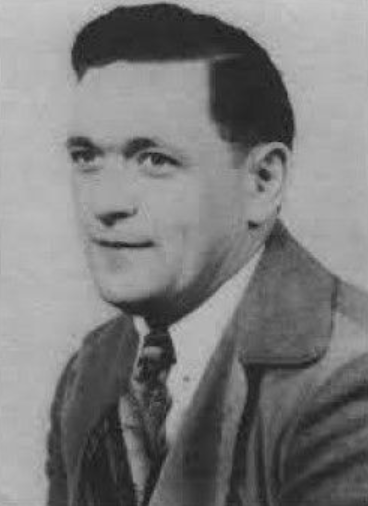
Eddie Klep’s life is full of ups and downs. As a teen, he and his younger brother Julius were rescued in Lake Erie when their boat began to sink. And Eddie wasn’t much of a student. He left school by 16, having completed school only through the eighth grade. He enlisted with the Pennsylvania National Guard in 1936 for three years, which kept him out of trouble until 1938, when he was honorably discharged less than halfway through his tour. However, two years later, Klep’s kleptomania got in the way – he was often arrested for burglary or larceny. This earned him the first of three stints in Pennsylvania prisons where he worked in the kitchens. The second stint followed a conviction for larceny and adultery in 1944. The third time came months after his Negro League career ended in 1946. And once, he got into an argument with a bunch of kids in a car – they chased him down and struck him with the car, leaving him unconscious on the side of the road.
When he stayed out of prison, he was a laborer or shop owner and, on the side (technically the left side), he pitched on Erie semi-pro teams. Klep actually turned down an offer to pitch professionally for a minor league team in Erie for his chance to pitch professionally with the Negro League Buckeyes.
Klep was married and divorced twice: once in Erie to Ethyl Dyer, which produced a son (Edward Joseph Klep, Jr.) and a second time he was married for a decade in California to the former Beatrice Sanchez, who was some sixteen years younger than Eddie.
Klep passed away on November 21, 1981 in Los Angeles.
Notes:
1910, 1920, 1930, 1940 US Census Records
Allegheny County (PA) Workhouse Records, 1940, 1944
Pennsylvania Death Certificates
Pennsylvania Veterans Records
Erie City Directory, 1953
California Marriage Index
California Divorce Index
California Death Index
Image Source (3): which appears to have been clipped from the cover of Elysian Fields magazine.
Image Source (1): Chicago Defender, April 6, 1946: 16.
Image Source (2): Cleveland Call and Post, May 4, 1946: 8B.
“Nine Rescued From Lake Erie by Guards,” Bradford Evening Star and Daily Record, August 18, 1938: 2.
“Personals,” Kane Republican, July 31, 1939: 3.
Fay Young, “Through the Years,” Chicago Defender, April 6, 1946: 16. (Headline within the article: Buck’s White Pitcher Can’t Play With Team in B’Ham)
Jimmy Jones, Negro Baseball’s Only White Player Banned from Buckeye Bench in Dixie,” Cleveland Call and Post, April 6, 1906: 1.
Cleveland Jackson, “White Hurler Augments Cleveland’s Drive to Retainn Negro Baseball Title; Four Stars to Miss Opener,” Cleveland Call and Post, May 4, 1946: 8B.
“Probably Opening Day Lineups,” Cleveland Call and Post, May 4, 1946: 8B
Cleveland Jackson, “Lone White Player in Negro Baseball Released by Bucks,” Cleveland Call and Post, June 8, 1946: 9-B.
Cleveland Jackson, “White Hurler Augments Cleveland’s Drive to Retain Negro Baseball Title; Four Stars to Miss Opener,” Cleveland Call and Post, May 4, 1946: 8B.
“Probably Opening Day Lineups,” Cleveland Call and Post, May 4, 1946: 8B
Many thanks to Danica Turner, an Ancestry.com member who created a family tree that made searching for some records much easier for me.


Say, hello! Leave a comment!!!