Today being the 118th anniversary of what is known as Merkle’s Boner, I am reminded that something somewhat similar happened in a minor league game in 1899 involving St. Paul Saints pitcher Chauncey Fisher. I first read about it in David Nemec’s Major League Baseball Profiles: 1871 – 1900 (Volume 2) under a bio of Albert Manasssau (the umpire).
As you may remember, the Giants and Cubs were in the midst of a heated race to win the 1908 National League pennant and facing each other in a key late September series at the Polo Grounds. The Giants had a chance beat the Cubs in the bottom of the ninth inning, having runners on first and third with two outs. (In fact, Merkle had just singled the tying run in and moved the winning run to third base).
Al Bridwell laced a single to centerfield and Merkle, rather than completing his run to second base, headed to the dugout. The Cubs, realizing his mistake, tried to get the ball to second base to get a force out. However, at that point, fans were spilling out onto the field. The Giants tried keeping the Cubs from getting the ball to second base (Joe McGinnity allegedly tossed the ball out of play), and the Cubs were allegedly keeping Merkle from correcting his mistake. The umpires ruled that Merkle was out at second and, because the crowd was in the way, declared the game over ending in a tie. Days later, the two teams finished the season with the same exact record. This necessitated a tiebreaker game, which the Cubs won. Essentially, Merkle’s not completing his run to second base cost the Giants a pennant – and he was forever linked to his play as it was now known as Merkle’s Boner.
Anyway, something similar to this happened in 1899 that could have been called “Fisher’s Failing,” and I have the receipts right here.
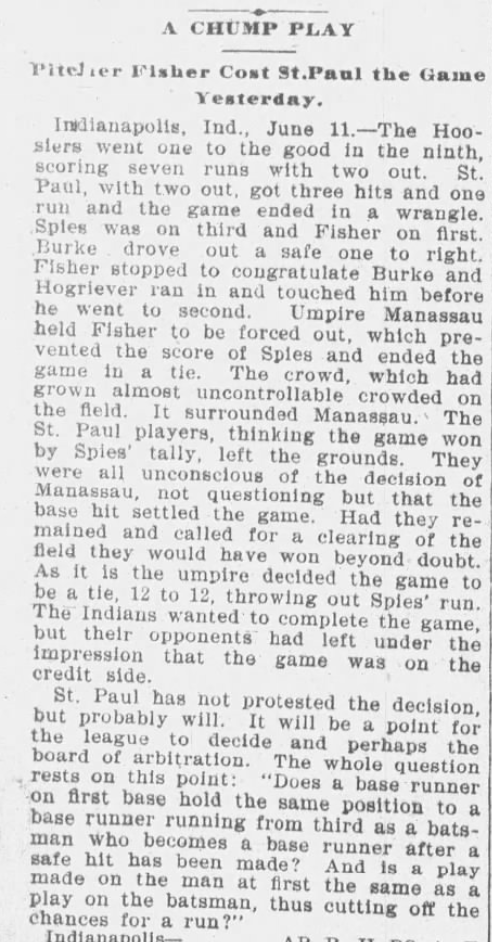
(“A Chump Play,” Minneapolis Times, June 12, 1899: 2.)
Essentially, the runner at first (Chauncey Fisher) didn’t dash to second base and was declared out, preventing the runner from third from scoring on a clean single (in this case to right field) because the third out was made on a force play (well, a tag on a runner who was forced to run). A crowd filled the field; the ensuing chaos did not allow the game to be completed as expected. This mental baserunning error, too, affected the outcome of a game – albeit a regular season game in the middle of a minor league season with no known massive implications.
I’ve never understood how this was even an issue in 1908 given that it should have been resolved at least decade earlier (or didn’t come up well before this). Every player on the field should have known that you have to complete the advancement to the next base if a force is in play. So, even if you have all the other related chaos, you can blame:
1) The coach at first for not reminding Merkle or Fisher to make his appointed rounds, or;
2) Merkle and Fisher for not knowing the rule (or forgetting it in the moment), or;
3) The umpires for not confirming the play’s completion (especially, in Merkle’s case, in such an important game).
Many of you may know little about Chauncey Fisher, so let me give you a quick bio of the former pitcher.
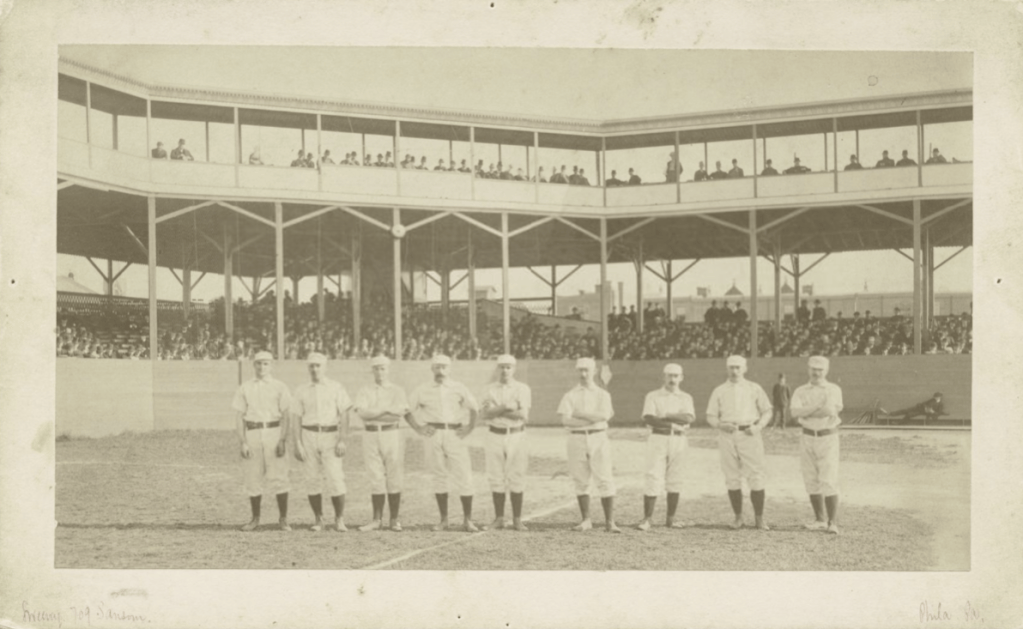
First – here’s a team photo of the Saints taken when Fisher was a member in 1899. I found it here (Threads Of Our Game1899 St. Paul – Threads Of Our Game). Fisher is in the middle – middle row, middle seat.
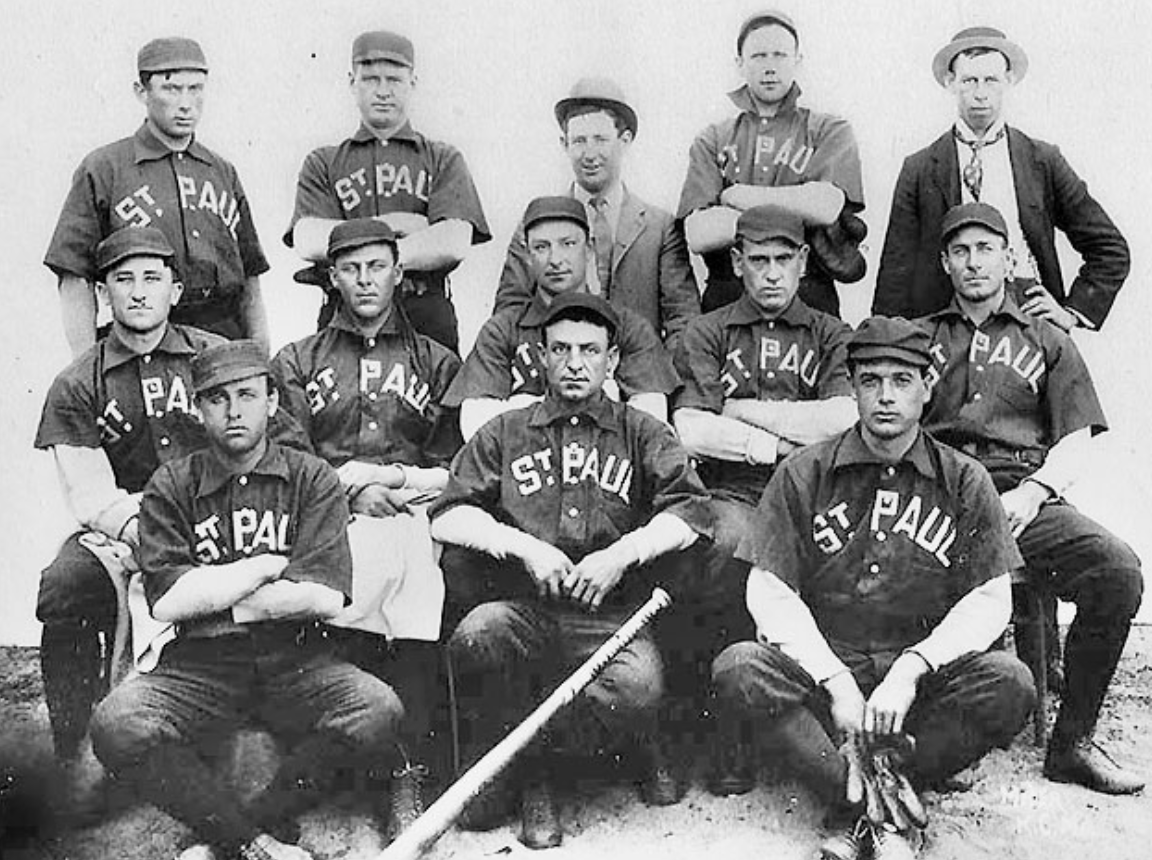
Chauncey Fisher was a pitcher who, because he didn’t seem to get along with all of his managers, seemed to get bounced around a lot in the 1890s. Born and raised in Anderson, IN on 8 January, 1872, he came through the semi-pro circuit and lower level minors before becoming a prospect while pitching in the Western League. Up and down between the National League and the Western League, it took about three years for Fisher to get his bearings, but by 1896 he was pretty good. Coming off a 36-win season for Indianapolis, the Reds used him regularly in 1896 until he was shuttled back to Indianapolis, apparently to help the Hoosiers win the Western League crown. (That would never happen today. Can you see the Yankees, out of a pennant race, sending a young ace down to AAA after showing form with the big club just to help their AAA club win a minor league crown?)
Fisher was traded to Brooklyn the next year; apparently he didn’t get along with Reds player/manager Buck Ewing. Fisher pitched well but got on the wrong side of Dodgers manager Billy Barnie, which got him farmed to Omaha. In 1899, Baltimore drafted him – just to send him back to their farm team in Buffalo, and eventually he landed with the 1900 Chicago White Sox in the newly renamed American League where his 19 wins helped the Sox win the first AL pennant.
A very good summary of Fisher’s career is found in the book “Major League Baseball Profiles: 1871 – 1900 (Volume 1)” edited and compiled by David Nemec. There are two volumes and this collection is truly amazing. In it, there are two pretty cool stories about Fisher. The first, of course, is that he was Fred Merkle in 1899. The second is that he was a heck of a gambler, and an especially good poker player. He would frequently leave tables $100 to the richer against weaker card playing foes.
Fisher’s career degenerated in the new century – drinking and weight gain are tough things to pitch through – and he retired to Anderson where he ran a wrecking company until 1937. He retired a second time to Los Angeles, where he passed away on 27 April 1939. Fisher had a younger brother, Tom, who also pitched in the majors.


Say, hello! Leave a comment!!!