George Bird was a centerfielder with Rockford in the National Association in 1871, the first “major league” of professional baseball teams. Articles written in 1940 noted that Bird was the last living player of that first major league season, having lived to the ripe old age of 90.
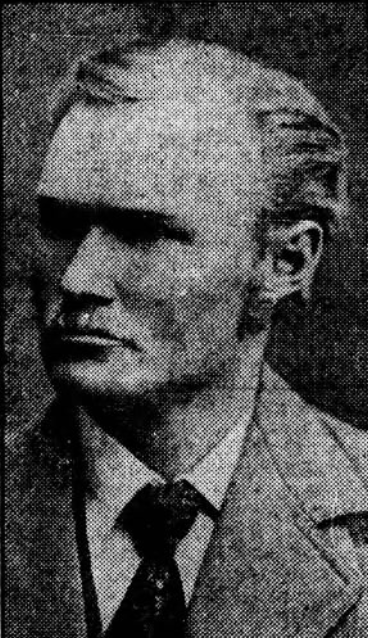
George Raymond Bird was born June 23, 1850 on a large family farm one mile west of the future hamlet of Stillman Valley, Illinois, which also happens to be the site of the first battle of the Black Hawk War in 1832. (Militia soldier Abraham Lincoln helped bury the dead after that battle…) George was the third of five children born to Ruleph and Azubah (Ainsworth) Bird, a New York native and a New Jersey native that chose to make a new life in north central Illinois where their 160-acre farm was miles away from the nearest city. Despite this, George was a bright kid and completed an eighth-grade education in a nearby schoolhouse.
All three Bird brothers, George, Albert and William, played baseball after the Great War for Slavery on a field found on Joshua White’s farm and eventually they all played amateur ball on a local Ogle County team called The Plow Boys. (In fairness, even one younger sister played baseball; a local history notes that Ella once hit a homer against the boys.) The Plow Boys were likely the second best team operating in the state of Illinois in the late 1860s, behind only the Rockford Forest City club.
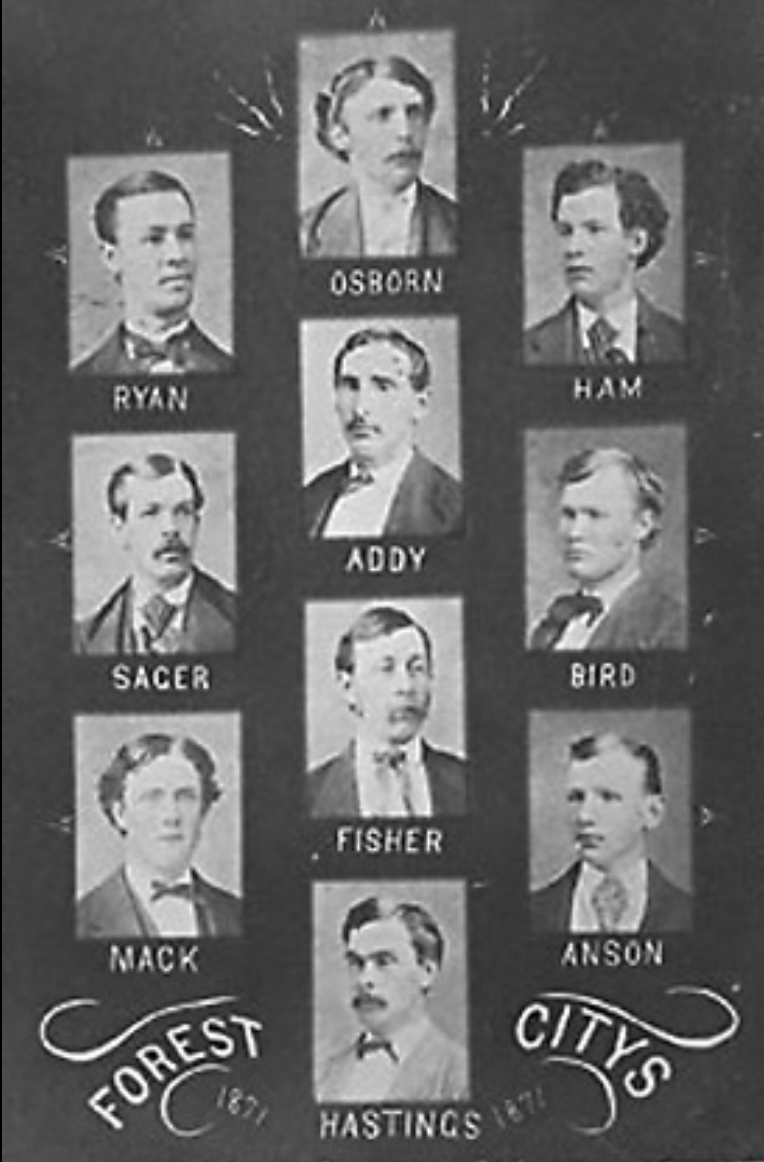
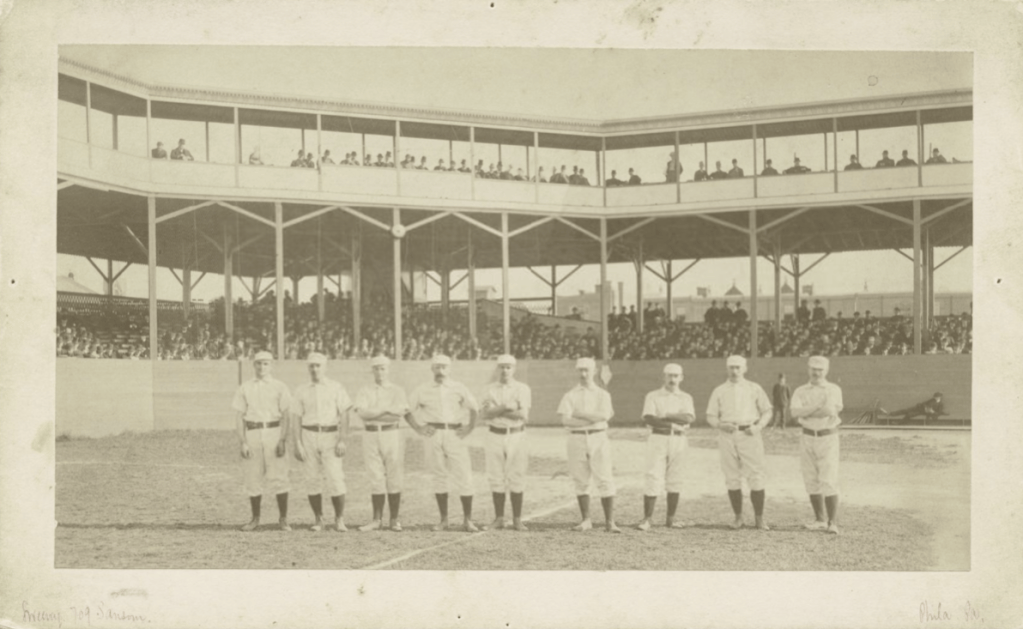
Historically, the Rockford Forest Citys were a fine club, formed in 1865 by local Rockford sporting and businessmen, that toured the western and eastern cities and faced some of the best clubs that hailed from the east when those clubs made western tours. Many of the early greats of baseball, Albert Spalding, Ross Barnes, Bob Addy and the like, were members of this club in the 1860s. The Forest Citys beat a great Washington Olympics squad – the only loss on their 1867 tour – and gave the 1869 Cincinnati Red Legs a run during that team’s tour. When professionalism came to the national pastime, a handful of players took advantage of large salary offers and left for the East. With openings on the Rockford squad, George signed with the Forest City club (below) in 1871 as he was approaching his 21st birthday. One of Bird’s 1871 teammates was Adrian (Cap) Anson. Bird faced Anson when the Plow Boys would face Anson’s Marshalltown, Iowa team.
“GEORGE BIRD, a Forest City player, though he has never played in its “nine,” is a good fielder, batter and runner, and promises well for the season of 1871. Mr. Bird is 20 years old, and weighs 150 lbs.”
“The Forest City B. B. C. For 1871,” Rockford Register, April 8, 1871: 8.
Bird was a fast runner and had some power with the bat. He hit .264 with five triples, which was second on the team. However, even with pitcher Cherokee Fisher and slugger Cap Anson on the club, the team struggled to just four wins in 25 games. (To be fair, they won four other games, but teams filed protests against the Forest City club for using Scott Hastings in games when he was ineligible, having played for another Association club in April as the season was starting. Two of those wins were against the Philadelphia Athletics, who would be declared champions with those two extra wins.)
Worse, the team was in Chicago when the great Chicago Fire started – which contributed to the end of the road for both the Chicago and Rockford franchises in the National Association. Bird recounted stories of the fire – and how there was little to eat until his team was finally able to leave the city and get back to Rockford.
After the 1871 season the Philadelphia Athletics displayed an interest in Bird, but apparently they scoffed at Bird’s salary demands. Bird took advice to hold out for a final, better offer but it never came. He took up farming instead, buying a plot of land adjacent to his father’s original farm. With the railroads now passing through his county, the local farmers became relatively prosperous – few more so than Bird. Nearly forty years later he turned over the family business to his oldest son and moved to Rockford.
Along the way, Bird married the former Carrie Preston in 1879 and they had seven sons. Two of them, Homer and Henry, were also baseball players. Henry was a catcher of some skill whose career ended when he signed up for a tour in World War I. Homer was signed by the Detroit Tigers in the years after that war, but Homer was dispatched to the minors and the young pitcher never made it to the parent club.
Interviewed in his 70s, George maintained a love of baseball. “I was over at the fairgrounds the other day,” Bird told Horace Buker, “…and it was about all I could do to keep from getting into the game.” And, he retained the memories of a young man, born in a remote rural area in Illinois, who travelled to cities large and small as a professional baseball player for the rest of his days.
Living to 90 meant, however, that Bird outlived three of his children, including one son who died in World War I. He passed to the next league on November 9, 1950 of “…infirmities of age…” Bird’s remains were buried near family in the Stillman Valley Cemetery.
Sources:
Image Source
1850, 1860, 1870, 1900, 1910, 1920, 1930 US Census Records
Illinois Death Records (via Ancestry.com)
Illinois County Marriage Records
“The Forest City B. B. C. For 1871,” Rockford Register, April 8, 1871: 8.
“Base Ball,” Philadelphia Inquirer, November 4, 1871: 3.
Horace Buker, “Cradle of Baseball,” Rockford Daily Republic, September 6. 1922: 1, 10.
“Death Reduces Old Forest City Roster to Three,” Rockford Morning Star, July 29, 1931: 1, 2.
“George Bird, at 90, Has Vivid Memories of Career in Baseball,” Rockford Register Star, June 22, 1940: 13.
“George R. Bird,” Rockford Morning Star, November 10, 1940: 1.
“Obit, George R. Bird,” Rockford Register Star, November 11, 1940: 13.


Say, hello! Leave a comment!!!