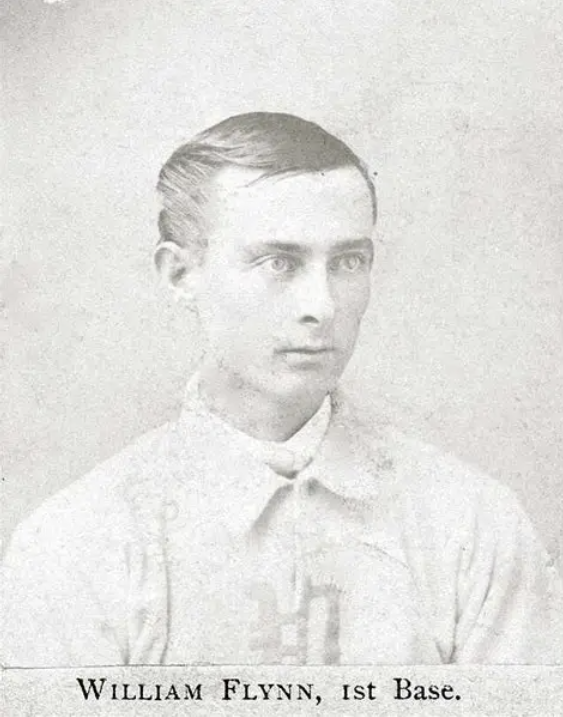
Clipper Flynn’s baseball life started in Lansingburgh, New York as a member of the Union Haymakers of that town. (A haymaker was someone who ran after baseballs in a field, cutting up grass and making hay.) He quickly earned a reputation as a fine hitter and first baseman easily noticed for his bright red hair. He was also active when standing at the plate waiting for the pitch, as he “…used to dance and wave his bat back and forth, to rattle the pitcher.”
The fifth of six boys, William Flynn was born April 29, 1849 to James and Ann (Dougherty) Flynn – a laborer and a really busy mom – and the boys took up jobs at a local brush factory before their teens to help pay the bills. Flynn joined the Haymakers of Lansingburgh in 1867; he might have been a replacement for pitcher Andy McQuide, who had been struck and killed by train in Albany in November 1866.
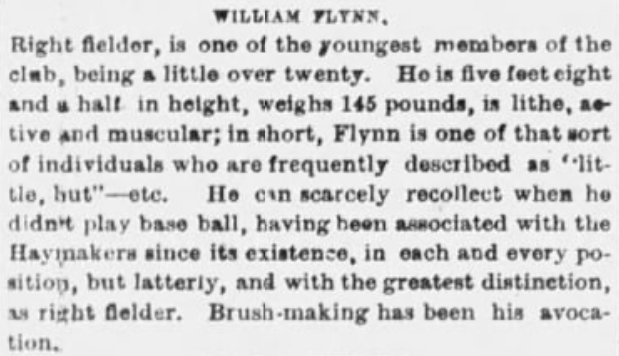
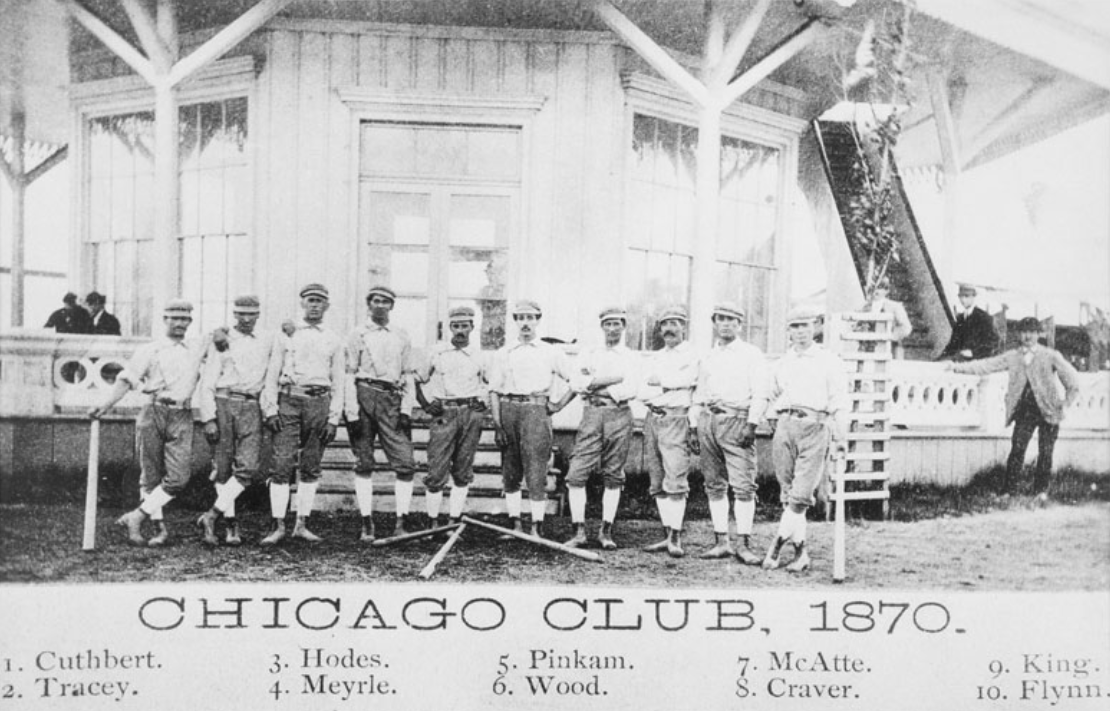
In 1870, Flynn was one of four Haymaker hitters recruited by the Chicago White Stockings, who spent a small fortune in building a team to challenge the Cincinnati Red Stockings for national supremacy. The White Stockings were “…one of the greatest hustling, bustling, rough rider lot of batters that ever was collected together for those early days of professional base ball.” Flynn mostly played right field while occasionally covering first base and, having the highest batting average on the team, frequently batted in the cleanup spot of the batting order.
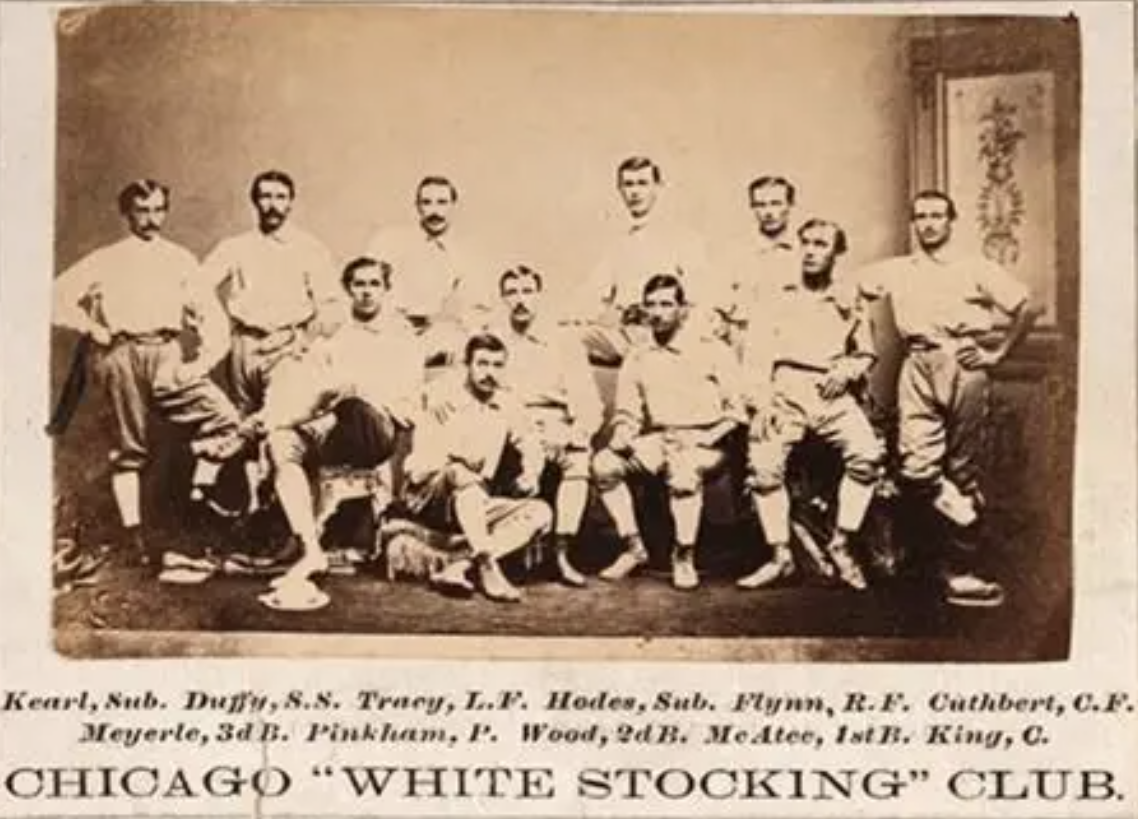
The White Stockings faced the Red Stockings twice, winning the first contest in Cincinnati, 10 – 6. The Red Stockings were making a late comeback when fate met Flynn in right field.
“Sweasy came to the bat amid breathless interest, for matters were getting very warm again. “Home run, Charley,” shouted the crowd. Charles laid himself out to respond to the severe extraction, and lifted the ball far and long to right field. Flynn backed off rapidly for it, and, as the ball descended, the vast assembly was breathless with suspense. It seemed to be going over his head. Sweasy and (Asa) Brainard were running the bases for dear life, and if that ball were not secured two more tallies were certain to be scored, leaving but two to tie and three to win. Flynn gave a bound into the air, and, as he threw up his hand, certain swinging of the arms and turning of the body indicated that he had missed the fly; but the next instant he turned and held up the ball with a shout of triumph, and a great game was at an end, and the White Stockings stood at the very head of base ball in America by beating the Red Stockings worse than they had ever been beaten before.”
“White Above the Red,” Chicago Tribune, September 8, 1870: 4.
Actor John Burton remembered the last out…
“The very first ball the big Red Stocking (Charlie Sweasy) hit, and it sounded like the crack of a pistol. Far out over right field a tiny speck was soaring like a bird, and Clipper Flynn was running like a rabbit, his eye turned back over his shoulder. Could he make it in time? I know just how it feels to have heart disease. I had it that day, and I wished very much that I should die and end it. Away out by the fence I saw Clipper drop on one knee and throw up both hands, and then I saw no more. A mighty wave of cheering swept out across the field…”
“Young Stakeholder Bet the Deposits on Chicago,” New York Sunday Telegraph, April 16, 1905.
When the season ended, he returned home and played for the Troy Haymakers in the inaugural National Association season. There, he batted .338, but only seven of his 48 hits went for extra bases. Despite that, Flynn was targeted by Dick Higham and several members of the New York Mutuals, who attacked Flynn and started a riot after losing a game to the Haymakers. Flynn was picking up his coat when Higham punched him in the mouth – and Flynn then ran toward his teammates as he was chased by other members of the Mutuals. Other players and law enforcement were able stop the melee.
The next year found Flynn playing nine games for the Washington Olympics. He left the team in May to return to Lansingburgh; he would play amateur games when not working at a brush factory now owned by the Flynn brothers.
Clipper married Bridget Sands and in rather short order they had five children. Unfortunately, however, two of those children died before reaching school age. Flynn, himself, caught typhoid fever in late 1881. He was sick but a few days when the disease took Flynn to the next league on November 5, 1881. He is buried in a family plot at St. John’s Cemetery in Troy, New York.
Notes:
1850, 1860, 1880 US Census
1855, 1865, 1875 New York Census
Warren F. Broderick, “Haymakers’ Bats Brought Fame, Troy Record, August 23, 1969: B4.
“The White Stockings,” Buffalo Express, June 22, 1870: 4.
“The Ball and Bat,” Cincinnati Enquirer, September 8, 1870: 3.
“Mutual vs. Haymakers – Another Defeat at the Green Stockings,” Brooklyn Daily Times, July 14, 1871: 3.
“The Base Ball Riot,” Brooklyn Eagle, July 17, 1871: 4.
“White Sox Figured in First Big Series,” Washington Evening Star, December 31, 1906: 9.
“In a Minor Key,” Chicago Tribune, September 23, 1899: 12.
“Diamond Dust,” St. Louis Globe-Democrat, November 13, 1881: 3.
Images:
https://www.threadsofourgame.com/1870-chicago/
https://www.tcdb.com/ViewCard.cfm/sid/222459/cid/14011918/1870-Peck-&-Snyder-NNO-Chicago-White-Stockings
https://en.wikipedia.org/w/index.php?title=Clipper_Flynn&oldformat=true#/media/File:Clipper_Flynn.jpg


Say, hello! Leave a comment!!!