
“In the third round, with a man on third and two outs, Crawford jumped about three feet in the air and clutched a screamer that Tony Smith intended for a two base crack…”
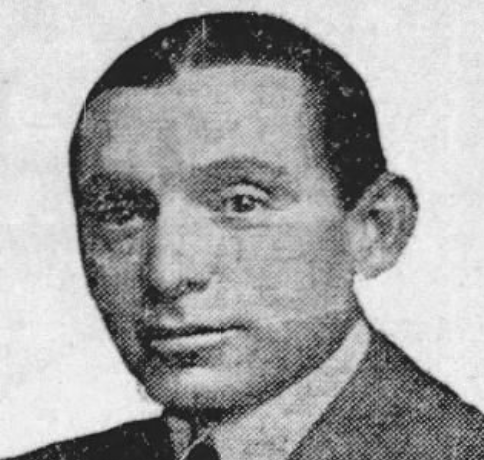
Forrest A. Crawford was a shortstop out of Texas who got a long look with the St. Louis Cardinals in 1906 and a shorter one in 1907 before being released to Providence. He had flourished in the Texas Leagues prior to this and remained remarkably popular in his adopted Austin, Texas home.
Crawford was the first of five children born to Edward and Mary (Smith) Crawford, born either May 10, 1881 or April 19, 1881 (see below) in Rockdale, Texas. While Forrest was a toddler the family headed to Austin where Edward took a position as a grocery clerk there. By his late teens, Forrest was also working as a clerk for a furniture maker in Austin, a member of a volunteer fire department, and learning to play baseball – something he first played as a young boy growing up in Austin.

He became a fine shorstop in the amateur circles and as he entered the professional ranks he married May Mallison in February, 1902. Their marriage produced a daughter on Christmas Eve, 1903.
The first time you see Crawford in the news as a baseballer is in 1903 with an Austin semi-pro team called Miller’s Colts. That team occasionally faced the professionals from other Texas cities and Crawford was the Colts’ best player. By mid summer, managers from other clubs were vying for Crawford’s services.
In 1905, Crawford joined the Houston Marvels (or Buffaloes) as their new shortstop. It’s in Houston where Crawford meets Ed Karger, who would become Crawfords best friend in baseball. Along the way, Houston is a runaway pennant winner in the South Texas League, a four team conglomerate that includes Houston, Galveston, San Antonio, and Beaumont. Crawford bats just .223, fourth best of the six players who appeared in at least 100 games for Houston that year. Crawford, who is gaining a reputation is a gentlemanly and popular player, achieves a modicum of local fame when the team attends a show at the Highland Park Theatre. There, soubrette Helen Pingree sang the song “Fondle Me” to Crawford, to the amusement of his teammates.

(Pingree, like Crawford, would eventually make it to the top of her field. Crawford made it to the big leagues; Pingree made it to Broadway. Pingree is worth a bio. She ran away from her Portland, Maine home at 14 to join the theatre, had very tiny feet – at one point measuring a size 1.5 C; and, when Pingree realized she would never become a better singer, she was able to make it as both a comedic and dramatic actress for better than five decades, touring the world with troupes where she was both a player and an owner.)
Part of what made this theatre incident funny was that Crawford had a reputation as an earnest, calm gentleman whose good influence helped other players on his team. McCloskey himself said that Crawford’s influence on Karger made Karger a better pitcher.
Houston was again fantastic in the early summer of the 1906 season, going on a three week tear during July. In the middle of that tear was Forrest Crawford, playing a steady shortstop and gathering lots of big hits that broke up games. St. Louis manager John McCloskey, who had managed in Houston years before, wired $600 to Houston for the rights to Crawford.
Crawford was given the shortstop job right away as George McBride, the regular shortstop, was hitting .169 and had been traded to Kansas City. While Crawford hit 50 points higher for most of the rest of the season, he didn’t have the range or consistency of McBride. Still, McCloskey kept the young infielder around for the beginning of the 1907 season.
Between the 1906 and 1907 seasons, Crawford operated a skating rink in Austin.
McCloskey gave Crawford a chance to make the Cardinals for 1907 but he quickly lost the shortstop job to Ed Holly. So, McCloskey instead sold Crawford to Providence for $1000. Providence, which had started the season winning about a quarter of its games and falling to last place, began to play much better after Crawford’s arrival. By the end of the season, Providence had climbed back to third place. Crawford had a good season in Providence, but he batted just .224 with little power. In fact, he never hit a home run in a professional game.
Still, there were rumors that Pittsburgh was interested in Crawford for 1908. After a stop in Houston, Crawford returned to Austin where he took up shop as a manager of a local loan company. And he needed to work. An article in the Houston Post said that a bank failure in Providence cost him whatever savings he had from playing there that summer.
As spring began, Crawford started the process of getting into baseball shape, but in the beginning of March he struggled to exercise without pain. The pain in his side came from lesions in his hip. He had injured his pelvic bone as a child when he fell down an elevator shaft. For most of 20 years the hip didn’t bother Crawford, but suddenly he was in worse condition and his health worsened with each passing day. Ed Karger, his teammate in both Houston and St. Louis called on him, leaving spring training to visit with his good friend. As a last resort, doctors tried surgery on March 29, 1908. It didn’t help, however, and Crawford died of heart failure caused by blood poisoning soon after the operation concluded in the Seton Infirmary in Austin, TX. Crawford’s remains lie in an umarked grave near family members in Oakwood Cemetery in Austin. His wife, May, moved to Houston to be near her family but died just three years later and is buried next to her husband.
As an aside, Baseball-Reference lists his birthdate as May 10, 1881, which is corroborated by the 1900 US Census which says he was born in May, 1881. However, if you use Crawford’s death certificate (which tells you how many years, months and days old he was when he died), it suggests his birthday was April 19, 1881. Either way, Crawford was three or six weeks shy of his 27th birthday when he passed to the next league.
Notes:
Travis County, TX Marriage Records
Texas Death Certificate
1900 US Census
Retrosheet.org
“Austin News Budget,” Waco Times-Herald, October 29, 1900: 6.
“Baseball This Afternoon,” Austin Statesman, July 26, 1903: 6.
“Sidewalks,” Austin Statesman, December 27, 1903: 3.
“Local Amateurs,” Houston Post, June 3, 1905: 3.
“He Did ‘Em Up,” Houston Post, June 5, 1905: 3.
“It Was Painful,” Houston Post, June 18, 1905: 16.
“Music and Drama,” Bangor Commercial, December 23, 1907: 8.
“Theatrical Chit-Chat,” Paducah Sun, February 2, 1902: 6.
“A Modern Cinderella,” Bangor Daily News, August 11, 1902: 2.
Harold L. Cail, “Two on the Aisle,” Portland Evening Express, May 2, 1953: 4.
“Cardinals Get Player Phyle,” St. Louis Globe-Democrat, July 25, 1906: 10.
“New Shortstop for Cardinals,” St. Louis Globe-Democrat, July 29, 1906: 15. (Also photo…)
“Sporting News,” Poplar Bluff Citizen, April 25, 1907, 2.
“In Other Leagues,” Scranton Republican, June 2, 1907: 6.
“Crawford Here,” Houston Post, October 4, 1907: 3.
Advertisement, Texas Loan Company, Austin Statesman, December 1, 1907: 23.
“Forrest Crawford Said to be Very Sick,” Austin Statesman, March 28, 1908: 8.
“Crawford Has Hard Luck,” Houston Post, March 29, 1908: 21.
“Forrest Crawford Answers Last Call,” Austin Statesman, March 30, 1908: 2.
“Forrest Crawford,” Austin Statesman, March 30, 1908: 5.
“Crawford from Baseball View,” Houston Post, April
 Mighty Casey Baseball
Say, hello! Leave a comment!!!