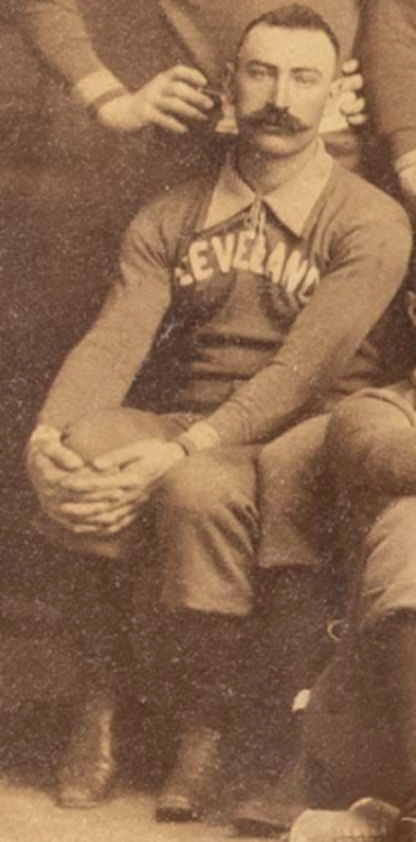
Joe Ardner was a Cleveland area second baseman who played with the Cleveland Blues in 1884 and the Cleveland Spiders in 1890. He also played plenty of minor league ball, mostly in the Midwest, between 1883 and 1896… During his long professional career Ardner played in the longest professional ball game on record. Ardner was also the second baseman for Cleveland (getting three hits, even) when Cy Young made his debut against Chicago in 1890, and he was the second baseman when Kid Nichols pitched for Kansas City in the minors.
Joseph Ardner was born February 27, 1858 in Mount Vernon, Ohio. I haven’t been able to trace his father, but his mother was Hannah (or Anna) van Tassell. He was the fourth of five children living with his mother and grandmother in 1870. Joseph learned the game on the sandlots of Mount Vernon and put on his first uniform with a Mount Vernon team in 1874. While he spent a bunch of his playing days at second base, he began as a catcher. Ardner soon moved to Mansfield, Ohio, playing for the Athletics of Mansfield. By 1879, he migrated to the Cleveland area, catching for the amateur Nine Spots of Findlay. Joining the amateur “Whites” in Cleveland, he Harry Arundel’s catcher – both would make it to the big leagues.
In 1882, he got opportunities to play in Philadelphia with the League Alliance’s Athletics, a team that evolved into the National League Phillies. Just about everyone who played on that 1882 Athletics roster got chances to play in the majors, including Arlie Latham, Hardie Henderson, and a young Pop Corkhill. He stayed in Pennsylvania for 1883, Reading Actives nine there. He was then signed to play with Altoona of the Pennsylvania State League, where he alternated with Charlie Manlove between catching and infield duties.
Ardner’s first opportunity to play in the majors came about because the Cleveland Blues lost Fred Dunlop, a wonderful young second baseman, to the Union Association’s St. Louis franchise. However, Ardner wasn’t up to the challenge, batting just .174 and striking out more than a quarter of the time. He was released and signed by Springfield, and Germany Smith took over the position for the Blues.
Already having begun a nomadic baseball life throughout Ohio and Pennsylvania, Ardner’s baseball life would become even MORE nomadic, but now heading in a westerly direction. After one more season in Springfield, he wound up in Oswego, New York and then Scranton for parts of 1886. Heading to Topeka for 1887, he’d bat .307 there – but that wasn’t a very good average on that team. Six regulars batted well over .400 (including former bio topic, Walt Goldsby) on that team and Perry Werden, a legitimate slugger, batted .386. At the end of the season, he was asked to umpire an exhibition game between the Cleveland Blues and the Indianapolis Hoosiers. Then, he signed on to play with Kansas City for 1888.
Kansas City was a very good team that was immediately improved when it gave 18 starts to the teenaged Kid Nichols, who went 16 – 2 in those starts. As for Ardner, he was hitting better than ever – above the team average by far and had moved up to the clean up spot by summer. However, in an August 24, 1887 game against Milwaukee, newly acquired Milwaukee pitcher Bert Wilson was feeling especially nervous. He had walked and hit one batter before throwing an inside pitch to Ardner that snapped his left arm above the wrist. Wilson finished with four hit batsman and Ardner left after the first inning with a doctor to have his arm surgically set.
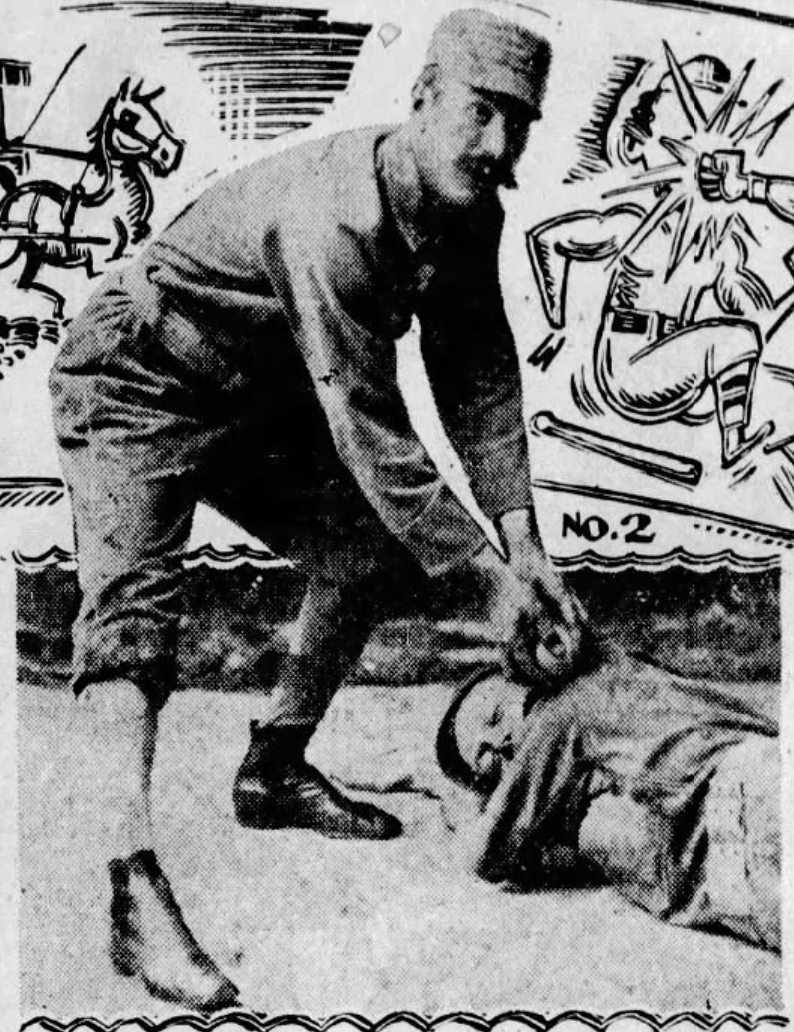
Ardner told this story about playing in windy conditions in Nebraska:
“I was with Kansas City and we were playing in Hastings, Nebraska. There had been a cyclone the week before; there was another the next week; this day’s wind storm they called the ‘sandwich.’ But, gee whilikens, the wind blew!
“One of the Hastings hitters rapped out an awful drive. Bug Holliday, in center, started for the fence. Then he turned around and ran in. The ball had met the gale and was being swept back.
“‘Take it, Joe,’ he said. I tried to, but the ball came over my head too fast. Pitcher Conway also tried to head it off, but failed.
“Finally, catcher Gunson chased back to the grandstand and got it – a real foul catch of an actual home run hit.”
“How a Cyclone Turned Home Run Swat Into a Foul Out to Catcher,” Cleveland Press, Jun 26, 1909: 6.
Kansas City moved Ardner to St. Joseph, but Ardner wasn’t ready to sign. So, he held out for money and used the chance to jump to California as leverage. The held out ended; by February he was in the fold playing second base for St. Joseph in 1889. He’d hit 7 homers that year, the most he would have in any season of professional baseball. In 1890, when many of the major leaguers would jump to the Players League, it opened up jobs for other players to take openings on National League and American Association rosters.
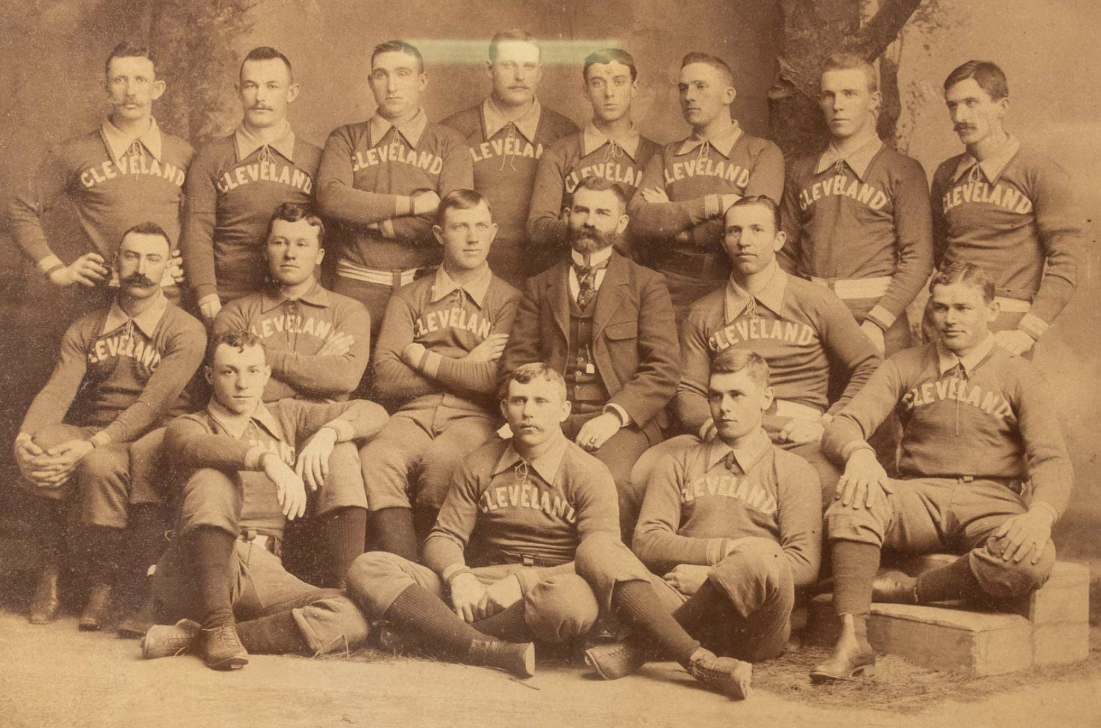
For Ardner, that meant being the regular second baseman with the Cleveland Blues. He fared better this time around, hitting .223 but still without much power or walks. By mid-season, Cleveland looked for replacements at second base, signing Pat Lyons. Lyons, however, got sick and only had two hits in his 42 plate appearances. Bill Delaney got a longer look, but wasn’t any better than Ardner. Mentioned earlier was Ardner’s participation in Cy Young’s MLB debut. He did more than participate. He was flawless in the field and delivered three hits with a double and triple and drove in three runs in the 8 – 1 win over Chicago.
That said, Joe’s major league career ended – and Ardner returned to his minor league nomadic existence. He started in Tacoma, returned east to Jamestown, and then spent time with teams in New York, Ohio, and Pennsylvania. He played a little amateur ball when he got home for about a decade and he would occasionally grab a glove and play in old timer games until, like all of us, he wasn’t really able to move around on the diamond.
One last baseball note…
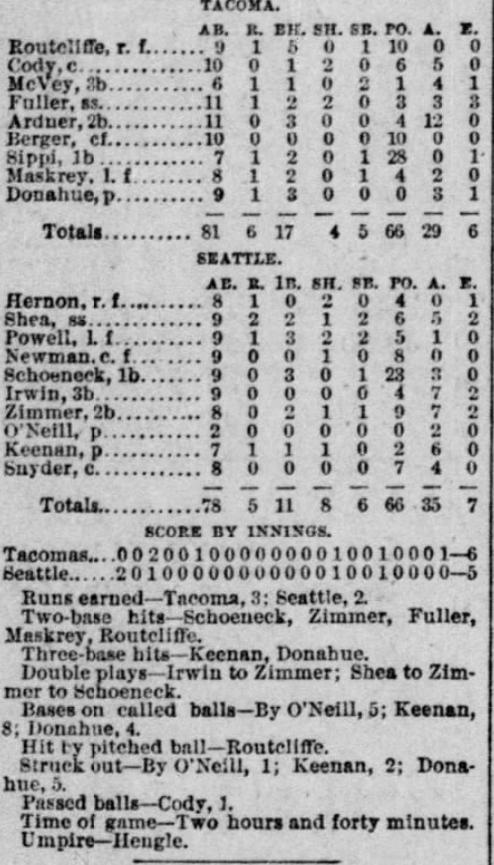
Ardner did, in fact, play in what was thought to be the longest professional baseball game at the time it was played. On May 16, 1891, Tacoma beat Seattle, 6-5, in twenty-two innings. Ardner had three hits in 11 at bats and was flawless in sixteen chances in the field. Neil Donohue pitched all 22 innings to earn the win. Grand Forks and Fargo played 25 innings the previous year to a 0 – 0 draw, but the game was between two independent teams and not under the auspices of “organized baseball.”
Cleveland would become his permanent (non-baseball) home for the rest of his life. Along the way, he married Ada (Doolittle) Trappe at the end of the 1884 baseball season. Trappe was a widow with three children; Joe and Ada’s marriage would produce no other children, though the youngest daughter, Jessie Trappe, eventually took Ardner’s family name as her own since her biological father had died two months prior to her birth.
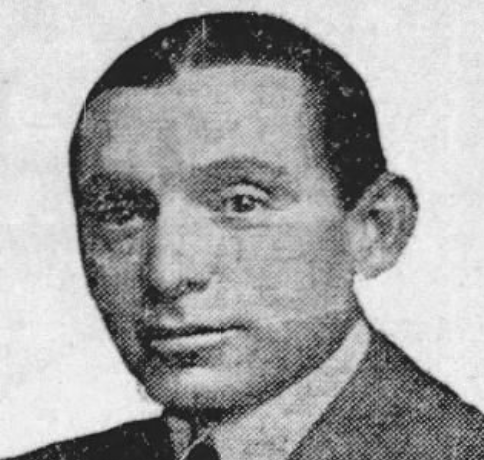
Joe Ardner had a major league mustache – see a reprinted photo here (top, left) found in a 1935 Cleveland Plain Dealer. After his baseball career ended he became a stagehand at the Cleveland Opera House and many other theatres in the city. Years later, on Decoration Day, he would head out to all the cemeteries in Cleveland and place flowers on the graves of former area stagehands.
When not working as a stagehand, Ardner also chalked up big league baseball scores in a sporting saloon and restaurant – and carefully chalked up restaurant menus.
Theatre writer George Davis wrote, “Ardner was an estimable, interesting man, the most contentedly self-sufficient one we have ever known…”
“…(E)very night, whenever we might happen in, we would find him sitting at a table, a robust, athletic, portly man, with his back to the bar. He would be playing solitaire. He played it hour after hour, with his derby hat on the back of his head. He would speak to no one, resent being spoken to by anyone he did not know so well as we knew him.
“It is desirable to grow old gracefully, go out easily, and this stage hand, a former ball player, did it.”
Ardner died of pneumonia on September 15, 1935. Already a widow, Ardner’s grave site in Cleveland’s Woodland Cemetery is not marked – making it much harder to place flowers on his grave…
Also:
1870, 1900, 1910, 1920, 1930 US Census Records
Cuyahoga County (OH) Marriage Records
“Base-Ball,” Cincinnati Enquirer, August 12, 1878: 8.
“Norwalk 18; Findley 11,” Cleveland Leader, August 15, 1879: 5.
“Doscher’s Crew,” Cleveland Leader, April 10, 1882: 6.
“The Big Batters in Philadelphia,” Cincinnati Enquirer, June 18, 1882: 2.
“The Sporting World,” Reading Times, May 30, 1883: 1.
“The Ironsides vs. The Altoona,” Lancaster Intelligencer, August 29, 1883: 7.
“Game Elsewhere,” Parsons (KS) Daily Sun, October 16, 1887: 1.
“Goldsby’s Golden Giants,” Topeka Daily Commonwealth, November 18, 1887: 4.
“Beaten in a Poor Game,” Kansas City Times, August 25, 1888: 3.
“Joe Ardner Signed,” Kansas City Journal, January 30, 1889: 2.
“Clevelanders for California,” Cleveland Plain Dealer, February 3, 1889: 9.
“Base-Ball,” Cincinnati Enquirer, February 17, 1889: 2.
“Diamond Dust,” St. Louis Globe-Democrat, February 17, 1889: 19.
“The Sporting World,” Cleveland Plain Dealer, July 7, 1890: 5.
“This Was a Corker,” Seattle Post-Intelligencer, May 17, 1891: 8.
“A Record Breaker,” Seattle Post-Intelligencer, May 17, 1891: 8.
“Tigers’ Long Game Recalls Noted One They Lost Long Ago,” San Antonio Light, July 20, 1909: 7.
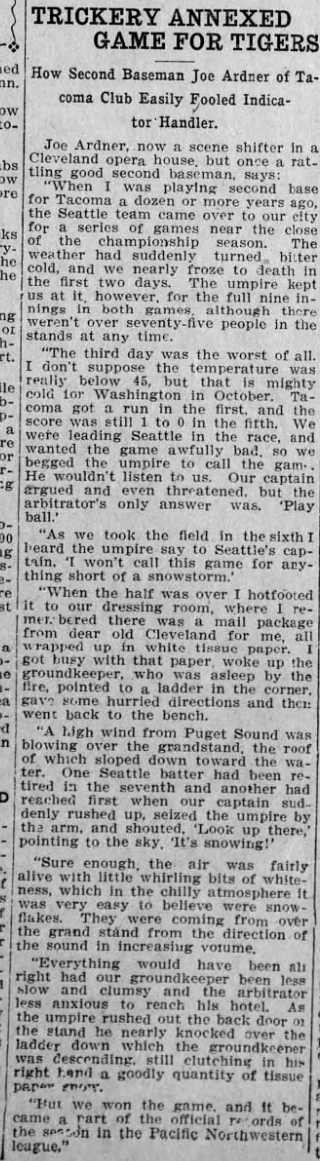
“Trickery Annexed Game for Tigers,” Fresno Morning Republican, February 11, 1909: 10.
“Ardner Will Play With Boos,” Cleveland Plain Dealer, May 25, 1915: 14.
“Ardner,” Democratic Banner (Mt. Vernon, OH), June 30, 1916: 5.
“Cy Young’s First Game as Major League Pitcher,” Springfield (MA) Daily News, January 17, 1920: 14.
“Flowered Graves,” Cleveland Press, May 27, 1935: 22.
George Davis, “Astaire Clicks Anew Starring in Picture Now Shown at Hipp,” Cleveland Press, September 16, 1935: 16.
“Flowered Graves,” Cleveland Press, May 27, 1935: 22.
Image Source: Team Photo
 Mighty Casey Baseball
Say, hello! Leave a comment!!!