
On Sunday, October 18, 1925, Goodwin was piloting a Curtiss JN-4H (called a “Jenny”; the H designated that it had a 150 HP Hispano-Suiza engine), having entered a banked turn to start his landing at Ellington Field in Houston. It suddenly went into a tailspin, falling some 200 feet and crashed. Witnesses said that Goodwin’s efforts helped it land on the right wing rather than nose down. There was little wind at the time, so it was hard to tell what specifically went wrong to cause the tailspin.
Marvin Mardo (Marv) Goodwin holds a rather morbid distinction in MLB history. He is the first major leaguer to die from injuries sustained in a plane crash.
Lieutenant Goodwin was doing a stint with the US Army Reserve at the time. (In previous years, he was a flying instructor during World War I.) Goodwin broke both legs in the crash and it was feared that he may have also cracked his skull. In fact, it was a crack at the base of his skull that was listed as his cause of death on his Texas death certificate. Staff Sergeant Mechanic William McNath, who was a passenger on the flight, was able to crawl out of the wreckage and walk away.
Goodwin was an active player at the time he passed to the next league. After a handful of seasons with Houston, where he both pitched and managed, Goodwin finished the 1925 season with Cincinnati.
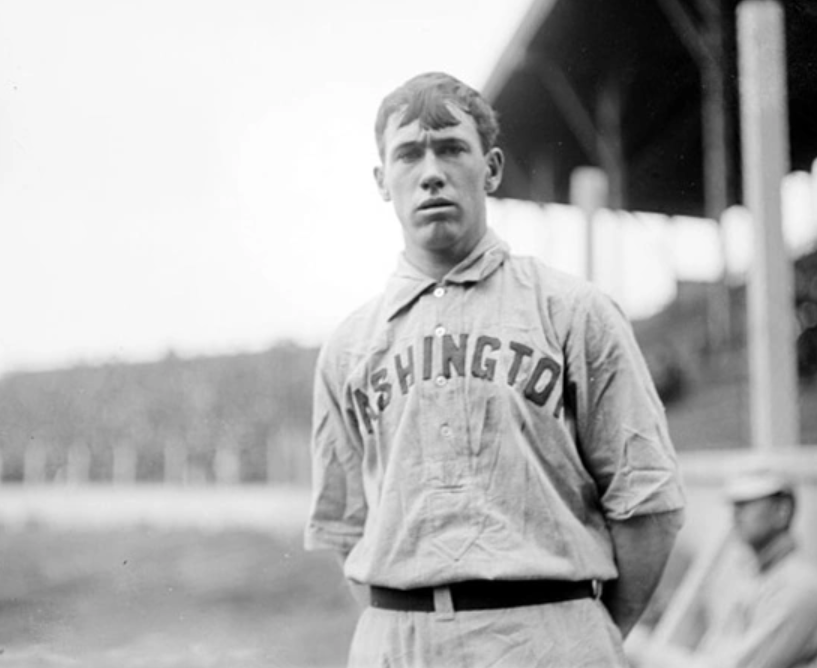
Goodwin’s MLB career started in 1916 with the Senators. A scout saw Goodwin pitch semi-professional ball in Gordonsville, Virginia and recommended him to Clark Griffith, who brought Goodwin to spring training that season. Armed with a good fastball, a changeup, and a spitball, he made an instant impression with Griffith.
“That youngster Goodwin, if I am not mistaken, is going to make a major league pitcher,” said Griffith… “All he needs is someone to show him how to pitch. He is green but has the right motion. He showed me enough stuff … to warrant closer watching. The fact that he has speed and perfect control impressed me.”
Not ready for prime time, Goodwin was dispatched to Richmond where he didn’t impress. So, Griffith sent the green pitcher to Martinsburg in the Blue Ridge League where he went 19 – 12, 2.32 – allowing just 188 hits in his 271 innings of work. (Goodwin, who was referred to as “Iron Man” in Martinsburg, actually lost both ends of a doubleheader in his last day with the club – pitching well but losing both ends to Chambersburg as Martinsburg was chasing Chambersburg for the pennant.) Washington gave him three relief appearances at the end of the season; but chose to let him go.
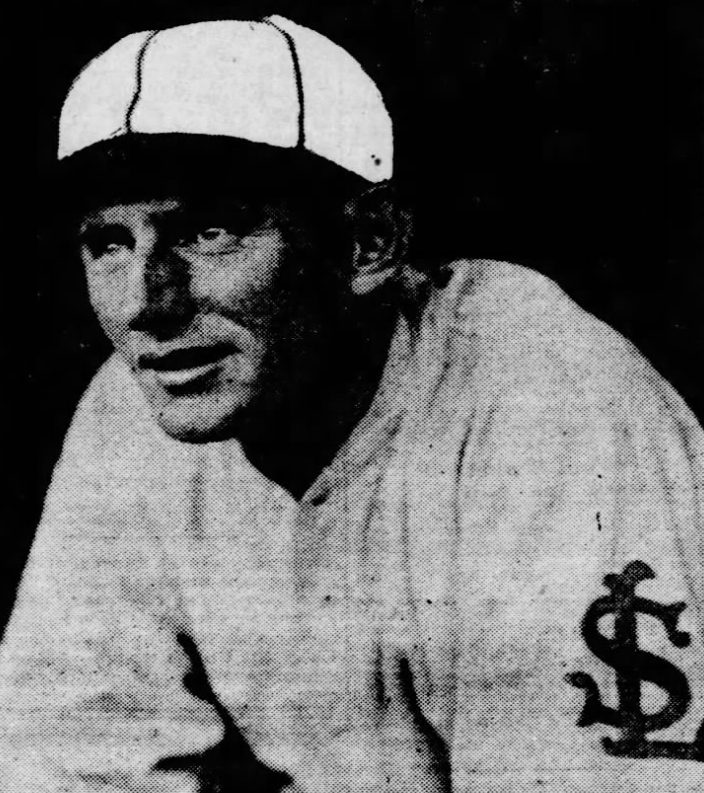
The trim, right-handed Goodwin signed with AA Milwaukee the next season. In three months, he went 8 – 9 with a 1.71 ERA. The Cardinals and the Brewers swapped a bunch of players in July 1917 which brought Goodwin to St. Louis – the cost to the Cardinals was estimated at about $15,000. (Milwaukee was happy to let him go, figuring he was interested in joining the army.) Goodwin pitched well in his twelve starts – but World War I drew Goodwin to the Army. One writer praised Goodwin’s decision in verse:
“He’d started on a promising career, with every chance of being strictly in it.
But when he had a chance to volunteer, he didn’t hesitate a single minute.”
Returning to St. Louis for 1919, Goodwin went 11 – 9 alternating between starting and relieving, but his stats went south once the dead ball era died. By 1921, he was pitching in Houston and soon after he took up managing the team as well. Once he settled in at Houston, he had three excellent seasons from 1923 to 1925, going a combined 57 – 39 – while also being the team’s manager those last two seasons. His 1925 season, where he won 21 games, earned him one last trip to the big leagues with Cincinnati – and he was expected to make the Reds roster again in 1926.
Marvin Mardo Goodwin was the oldest of three sons and three daughters born to Prucia Marvin Goodwin and Susie May (Baughan) Goodwin in Gordonsville, Virginia on January 16, 1891. The father was a conductor of a local railroad; the mother raised a family of patriotic children. Of interest – Prucia served in the US Army himself, rising to the rank of captain, and Marvin’s grandfather, John Franklin Goodwin, served in the Confederate Army during the Great War for Slavery.
After his death on October 21, 1925, Goodwin’s remains were returned to Virginia and he was buried in a family plot in Maplewood Cemetery in Gordonsville.
Notes:
1910 US Census
1910 US Census
Texas Death Certificates (both Marvin and Prucia)
Stanley T. Milliken, “Goodwin Makes Big ‘Hit’ in His First Appearance,” Washington Post, March 22, 1916: 8.
Louis A. Dougher, “Gedeon Improves With His Bat as Season Advances,” Washington Times-Herald, April 22, 1916: 14.
“Our Boys Crack in Chambersburg Games and Maroons Almost Clinch the Pennant,” Martinsburg (WV) Evening Journal, September 2, 1916: 3.
“Rickey Acquires Another Pitcher From Association,” St. Louis Star and Times, July 24, 1917: 8.
“Marvin Goodwin Wires Confirmation of Rumor He Has Become Aviator,” St. Louis Post-Dispatch, December 2, 1917: 13.
L. C. Davis. “Sport Salad: To Marvin Goodwin,” St. Louis Post-Dispatch, February 21, 1918: 24.
“Goodwin Hurt as Plane Falls; Legs of Reds Pitcher Broken; Skill Breaks Force of Crash,” Cincinnati Enquirer, October 19, 1925: 1.
“Marvin Goodwin Crashes in Plane at Houston; Severely Injured,” Waco News-Tribune, October 19, 1925: 1.
“Marv. Goodwin Dies From Injuries,” Toronto Star, October 21, 1925: 13.
 Mighty Casey Baseball
Say, hello! Leave a comment!!!