Marvin Hawley was five weeks short of his 29th birthday when he died of rheumatism, but that doesn’t tell the half the story of his quick decline from regionally known pitcher marrying a teen bride, to a divorced man dealing with injuries sustained in a saloon altercation, to losing a child, getting a divorce, moving home, and, soon after, leaving this world.
For our purposes, Hawley was a major leauge baseball player. According to the Cleveland Leader, Marvin was known as “Dyke” Hawley while playing for amateur teams there. At some point he was known as Steve Hawley – which may have been his hiding his identity because he had recently finished his prep classes at Oberlin and was considering staying for college. Like his life, Hawley’s major league career is brief. His lone MLB game was with Boston in the second game of a September 22 doubleheader against Louisville as the 1894 season was winding down.
The Oberlin alum was a bit nervous – the righthander walked two batters and then beaned the third to open the game. Later, Hawley started the fourth inning the same way. When umpire Tim Keefe halted the game due to darkness after seven innings, Hawley had allowed six runs on ten hits and seven walks. Last place Louisville had earned a split in the doubleheader. Boston, who had spent most of the summer in first or second place, had faded to third and would soon run out of games with which to attempt one last run at the pennant.
It wasn’t the end of his time in baseball. Hawley got a one game, three inning tryout in a Western League game in 1895. After a summer working amateur baseball in Cleveland, Hawley pitched minor league ball in 1897, winning 24 decisions for Newport (RI) of the New England League, earning time with Cincinnati the following spring. His pitching in practice got the attention of Jesse Burkett, who said, “That Hawley is a cracker jack. I think he’s one of the best that ever stood on a slab.” While he didn’t make the team he pitched practices and exhibitions until he was farmed to Indianapolis for 1898, where he went 11 – 15.
His arm apparently left him at spring training with Cincinnati in 1899, so he took a job as a fireman with the Northern Pacific railway in late 1899. He played ball in the Pacific Northwest in 1900 with a team in Kendrick, Idaho and Spokane, Washington (well – his brother was a member of Spokane’s Chamber of Commerce and suggested using him on their amateur athletic club team). However, he ditched that team for a railroad engineer job with the Oregon Railroad and Navigation Company and to take on a wife (the former Lucia McKinney). He returned to the west, however, to pitch in Salt Lake City (1901) and both Butte and (briefly) Portland (1902).
While living in Washington, Lucia and Marvin’s marriage disintegrated quickly. The couple had one child in 1902, but young Victor Thomas Hawley fell ill and died at 8 months old on June 14, 1903. Within weeks of the baby’s birth, Marvin was involved in an altercation at a saloon. James Hamilton pulled out a razor and sliced Hawley’s leg with the gash going down to the bone. Hawley spent at least two months dealing with the injury while his assailant dealt with the chance of spending time behind bars for attempted murder. Then, four weeks after the baby died, Lucia filed for divorce citing lack of support. She was 22 herself; the stress of dealing with her husband’s injury and then the illness and death of a child gave her reason to want to leave her marriage and return home to her own family.
With that, Hawley returned to Ohio and took a position with the Lake Erie and Western Railroad as an engineer when he fell ill. Months later, on April 28, 1904, Hawley himself was dead.
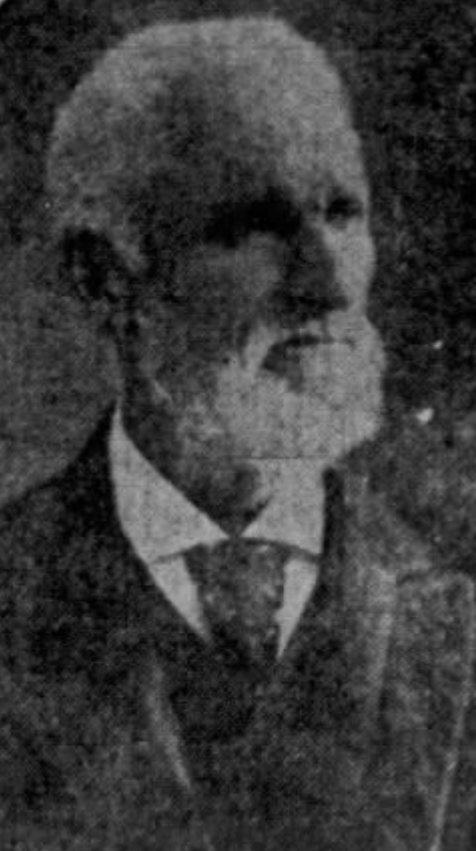
Marvin Hiram Hawley was the last of eleven children born to Gideon and Sophronia (Sesler) Hawley, arriving in Painesville, Ohio (sometimes listed as Amboy, Ohio) on June 2, 1875. Marvin’s love of the rails came from his father; Gideon Hawley (picture at left) spent his adult years as a railroad engineer, starting in the mid-1840s. In fact, in the 1890s it was thought that Gideon Hawley was the oldest engineer operating a train in the country, having passed vision and hearing tests to confirm he still had the skills and alertness to keep his position. Ultimately, he worked in the railroad industry for 68 of his 87 years on earth.
Notes:
1860, 1870, 1880, 1900, 1910 US Census Records
Washington State Birth Records
Washington State Marriage Records
Ohio Death Index
“Tried Amateurs,” Boston Globe, September 23, 1894: 4.
“Notes of the Diamond,” Cleveland Leader, April 15, 1897: 3.
“Baseball Gossip,” Cincinnati Enquirer, April 29, 1898: 4.
“Gideon Hawley,” Buffalo Express, December 17, 1899: 11.
“Good Game Expected,” Spokane Spokesman-Review, June 23, 1900: 3.
“Big Game is Today,” Spokane Spokesman-Review, July 4, 1900: 5.
“Grandstand Plans,” Spokane Spokesman-Review, July 15, 1900: 3.
“Will Pitch No More,” Spokane Spokesman-Review, November 1, 1900: 3.
“Cutting Affray at a Saloon,” Spokane Spokesman-Review, October 26, 1902: 2.
“Hawley Still in a Hospital,” Spokane Chronicle, December 12, 1902: 2.
“Anderson Will Be Sentenced,” Spokane Spokesman-Review, December 23, 1902: 12.
“Death of Baby Hawley,” Spokane Spokesman-Review, June 15, 1903: 5.
“Didn’t Support His Wife,” Spokane Spokesman-Review, July 10, 1903: 1.
“Notes of the Diamond,” Cleveland Leader, May 3, 1904: 8.
“Sixty-Eight Years at Work,” Fort Wayne Sentinel, December 12, 1913: 12.
Bob Dolgan, “Digging into the past,” Cleveland Plain Dealer, December 27, 1995: 7D,
 Mighty Casey Baseball
Say, hello! Leave a comment!!!