Leonard Walker Lovett spent seven games on a major league roster, but in his seventy years, he spent a whole lot of time on the bench.
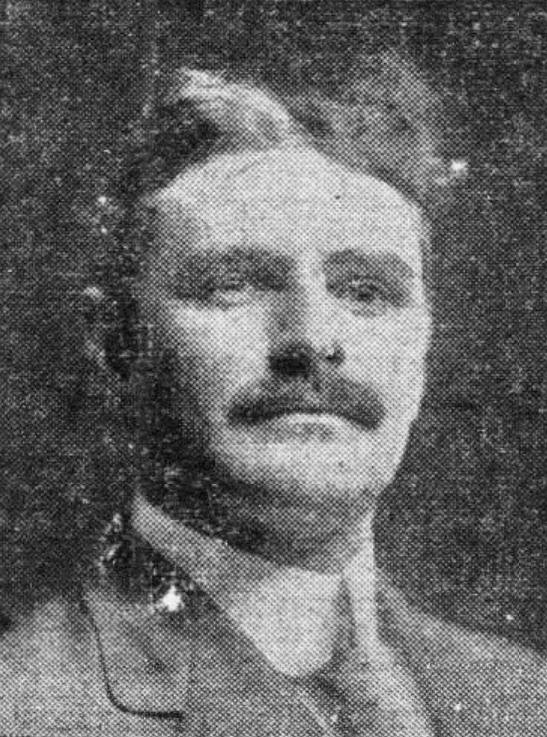
Lovett spent a few years pitching for the Expert and Olympic Clubs of Philadelphia, good semi-professional teams that faced many of the finer teams of the late 1860s and early 1870s. In 1873, the Resolutes of Elizabeth, a New Jersey-based club, was in need of a fresh pitcher and gave Lovett a shot on August 4, 1873. The Resolutes were not very good, mind you. Despite having a few experienced professionals such as Doug Allison, Art Allison, and Rynie Wolters, they would finish the season with but two wins in their twenty-three games. Lovett was the loser of the penultimate game of their existence.
The New York Times was particularly harsh in describing the Resolutes after the game:
A few weeks since it was announced that the Resolute Club of Elizabeth had gone under – had disbanded, and straightaway a shout of joy went up from all those unfortunate individuals who have so often wended their way to the Union Grounds only to suffer the infliction of witnessing these Jerseymen play a most outrageously muffing game. Imagine the surprise and disgust then of these unfortunates when the public prints announced that the “foreigners” would play the Atlantics on the Union Grounds on Monday – yesterday. Well, they did play and this time presented for the public gaze a new pitcher, in the person of Mr. Lovet(t), of the Olympics of Philadelphia… With this team the Atlantics toyed for about two hours, in the presence of 300 as disgusted individuals as were ever seen.
There were a handful of bets suggesting the Resolutes would lose by the second inning. The Resolutes got off to a slow start, trailing by eight after the second and even more after a few more innings. However, Elizabeth rallied to cut the gap back to eight runs, so those less confident in the Resolutes resolve neither won nor lost their bets. Lovett and the Resolutes lost to the Atlantics, 16 – 8. The Brooklyn Daily Union noted that Lovett “proved quite effective in the position” – only four of the runs allowed were deemed earned. (This was also the debut game of Henry Kessler – someone whose career was better, but whose life was considerably shorter and rockier.)
Lovett returned to his Philadelphia baseball teams, getting in six more games with the 1875 Philadelphia Centennials as an outfielder. While he hit okay, Lovett made errors in three of his ten chances – and with that his major league career was over. He joined the Actives of Reading, Pennsylvania the next year. Additionally, Lovett announced that he was publishing a monthly baseball newspaper in Reading (I wonder if any exist?).
Pretty soon his baseball player days would end as he had bigger civic duties in his future. He moved to New London, Pennsylvania by 1877 and took up work with a family cabinet, furniture and undertaking business. (The 1870 US Census says that at 18 he was working as dentist – which, frankly, is a scary thought.) His father’s death in 1876 may have contributed money to the brothers to form their company.
Before the turn of the century, Lovett moved his family to Newark, Delaware and started his own family furniture business. Building on his civic reputation, he was made a magistrate there, having been nominated to the bench by four different Pennsylvania governors. In 1912, Lovett was made Master Workman of the Ancient Order of United Workmen – a fraternal organization that also served as a life insurance company of sorts for the working class.
Born July 17, 1852 to Leonard Walker and Sarah (Nutz) Lovett in Lancaster County, Pennsylvania, he was sixth of eight children born to the farmer and his bride. By 1870, the farmer retired from his farm in New London, PA and moved his family to Philadelphia where two of his sons took up cabinet making. Younger brother Rodman was still a student at fifteen; it appears likely that Leonard had at least a middle school level education and likely a couple years of schooling beyond that. The Lovett family was raised Methodist and, when the younger Leonard returned to New London after his baseball days, Leonard was a member of the local board of education and the superintendent of his church’s Sunday school.
Around 1872, Leonard married Emma Whitehurst and the marriage produced six children, one of whom (Rodger Rodman Lovett) would take over the family furniture business when Leonard was made justice of the peace. That said, Lovett never lost his interest in baseball; he attended local games until illness made it impossible for him to leave his home.
In 1921, Lovett came down with anemia likely caused by carbuncles. Two of his sons provided blood through a transfusion in the summer of 1922, but Lovett never recovered. He died in his home in Newark the evening of November 19, 1922. His remains lie in Head of Christiana Presbyterian Cemetery in Newark.
Notes:
1860, 1870, 1880, 1900 US Census
Baseball-Reference.com
Retrosheet.org
FindaGrave.com
“Base Ball – Olympic vs. Pythian,” Philadelphia Inquirer, September 4, 1869: 1.
“Base Ball – Athletic vs. Olympic,” Philadelphia Inquirer, October 4, 1869: 2.
“Boston vs. Expert,” Philadelphia Inquirer, May 01, 1871: 3.
“A Victory for the Atlantics,” New York Herald, August 5, 1873: 1.
“Base-ball,” New York Times, August 5, 1873: 8.
“Base Ball,” Brooklyn Daily Union, August 5, 1873: 4.
“Ball and Bat,” Morning Herald, (Wilmington, DE), September 23, 1875: 1.
“Reading’s Base Ball Journal,” Reading Times, February 5, 1876: 1.
“State News,” Pittsburgh Commercial, April 1, 1876: 2.
“Buckeyes vs. Actives,” New York Clipper, June 10, 1876: 5.
“New London Items,” Oxford (PA) Press, August 8, 1877: 3.
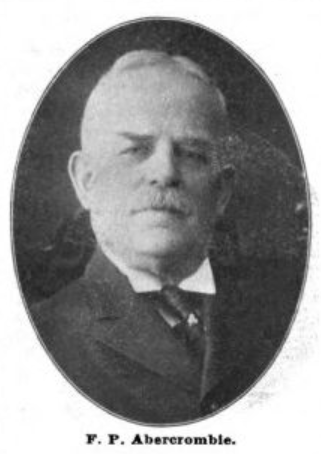
“Officers Seated By Thames Lodge,” The Day (New London, PA), February 7, 1912: 8. (Also image source…)
“Base Ball Brieflets,” `West Chester (PA) Daily Local News`, June 17, 1922: 8.
“An Old-Time Pitcher Dies,” Reading Times, November 20, 1922: 1.
“Leonard Lovett, Magistrate, Dead,” Wilmington Morning News, November 20, 1922: 3.
“Leonard W. Lovett Dead, Aged 71 Years,” Early Evening (Wilmington, DE), November 22, 1922: 2.
 Mighty Casey Baseball
Say, hello! Leave a comment!!!