Ryne Sandberg died from prostate cancer this week, and along with him went some portion of my teenaged baseball fandom.
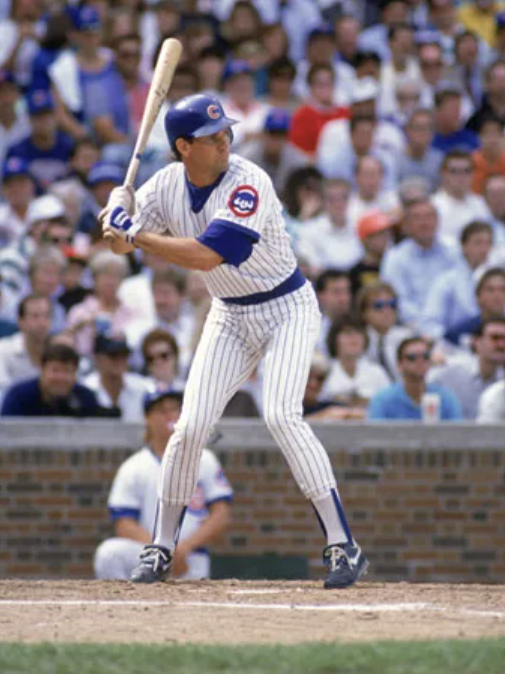
I was a late teen when the Cubs swapped Ivan DeJesus to the Phillies for Larry Bowa and, at the insistence of Dallas Green, Sandberg. Initially playing third base, it took him a while to get a few hits (he started his Cubs career 1 for 32) but he was smooth as a fielder and once he started hitting he became a fan favorite for millions of Cubs fans including me.
I think it’s fair to note that when the Cubs got Sandberg, the Cubs didn’t have that much going for them. Once the legends of the late 1960s and early 1970s retired or left town, the Cubs had gradually fallen into the baseball abyss, challenging the lowly Mets for the bottom two rungs of the National League East. You could get great seats when you walked up to Wrigley Field; there weren’t 38,000 people going to games except maybe on Opening Day, or part of a season when Dave Kingman got hot in 1979. It was empty and certainly far less joyful than a game today. It may have been “The Friendly Confines,” but it was also the empty confines.
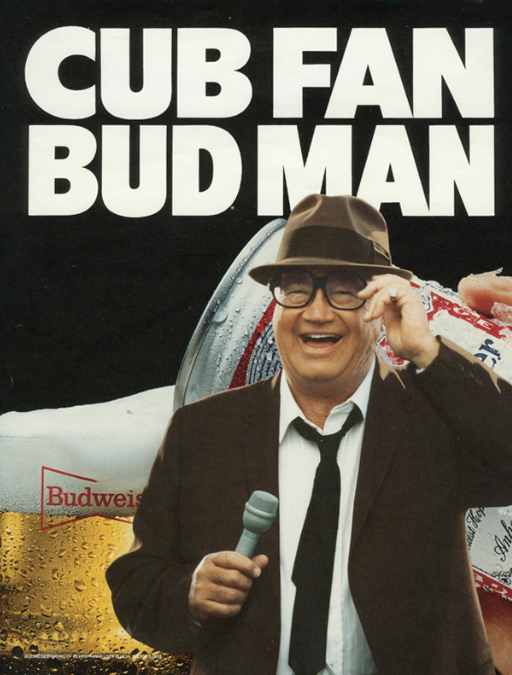
Two things changed the fortunes of the Cubs. The first was Ryne Sandberg, who brought a quiet demeanor but a loud excellence to the park. The second was replacing the retiring Jack Brickhouse with Harry Caray in the broadcast booth. Caray was excitable (and more entertaining when he was excited) – and Sandberg made the games exciting. And, Caray helped sell more beer.
After Sandberg moved to second base, Jim Frey took over the managerial reins of the Cubs in 1984 and convinced Sandberg that he could be great if he just looked to pull the ball into the seats from time to time. When the opportunity and the pitch is there – try to crush it. Sandberg went from a 7 – 8 homer a year guy to someone who could hit that many in a month. The Cubs had a different feel in 1984. Sandberg got hot, singlehandedly won baseball games (one was even named after him after he hit two late homers off Bruce Sutter to help rally the Cubs to beat the Cardinals), and jumped into the 1984 MVP race as the Cubs jumped to the lead of the NL East race.
That year I saw a lot of games. An April doubleheader against the Cardinals was a gas – a bunch of us college kids made the drive. That day the Cubs drew less than 6,000 people to the park. 6000! I kept making trips to Wrigley – the Cubs were competitive and fun. All the young players were playing better and more Phillies arrivals (Bobby Dernier, Gary Matthews) were contributing in a big way. Green leveraged young players (including Joe Carter) to get Rick Sutcliffe, who went 16 – 1 the rest of the way. He sent a frustrated Bill Buckner to the Red Sox and got Dennis Eckersley, who still had some time left as a productive starter. They all climbed on board the Sandberg express.
An August doubleheader pitted the Cubs against the rising New York Mets. Now, more than 39,000 people were at the games. Fans chanted MVP whenever Sandberg batted – then booed Keith Hernandez (the other top MVP candidate) when he batted. The Cubs mopped up on Dwight Gooden (the top rookie) and swept the Mets behind them for good. We got to Wrigley five hours early that day to make sure that we could get bleacher tickets.
You see, the only way to get bleacher tickets in Wrigley was to buy them day of game. We would go down and get in line and sit in the cheap seats. And we needed to get there early – if we hadn’t, we might not have gotten in.
I kept going to games and watching on TV and listening to broadcasts on the radio that were piped into the Sportmart store where I worked part-time. Sandberg kept hitting – he very nearly finished with 20 triples and 20 homers (19 of each). For the last day of the season, Jon Stancik and I spent the night sleeping on Waveland Avenue to make sure we could get bleacher seats. The Cubs won the last game of the season, once again pulling the game out by beating Bruce Sutter, who was looking to set a single-season saves record. It was the craziest day of my Cubs fandom – at least until Game Seven of the 2016 World Series.
From that summer forward, Ryne Sandberg became (and remains) my favorite player of all-time (with apologies to Fred Lynn, who had become my favorite player from 1975 to 1983).
Sandberg continued to be great for more than a decade. The Cubs were never as great as he was – and then they had the nerve not to make Sandberg their manager after Sandberg successfully worked his way up the minor league ladder in the 2000s. I’ll never understand that. Sandberg returned to the Phillies, who were nowhere near as good as the Cubs were at that time and Sandberg was bludgeoned back home two years later.
Somewhere Sandberg found peace in his family and his retired, stress-free life. He would become a Cubs ambassador and was able to reciprocate the love he received from his teammates and fans back to his teammates and fans. He seemed so much happier in his 60s than he did in, say, his 30s.
And Wrigley Field was a much happier place than when he joined the team in 1982. The reason it was happier was because Sandberg brought fans to the ballpark. After 1984, because people were sleeping on Waveland and Sheffield Avenues to get bleacher seats, the Cubs changed the ticketing rules and made it such that people could order bleacher tickets in advance. Millions of people who were watching Cubs games on WGN’s cable network were drawn to the game because of Sandberg – and started making regular pilgrimages to Wrigley Field. A once empty baseball stadium was now a shrine; it was a place for baseball fans to find joy. And they finally got lights! Losing the homefield advantage in the 1984 playoffs because of the inability to play night baseball suddenly made it imperative for the Cubs to illuminate Wrigley Field.
Safe travels to the next league, Ryne. Like so many others, you were a member of the family. You made the baseball world a greater place and I will remember that forever.
 Mighty Casey Baseball
Say, hello! Leave a comment!!!