
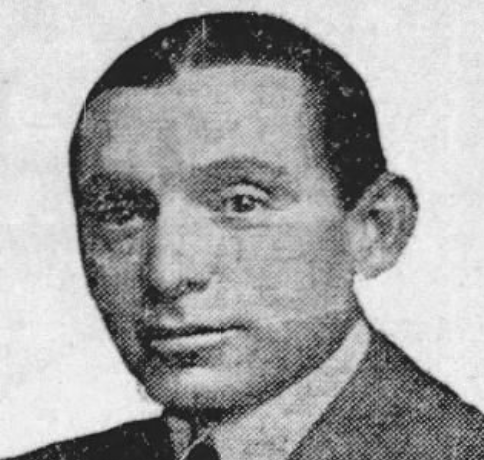
Bob Keating makes your baseball encyclopedia and baseball-reference.com because on August 27, 1887, Keating pitched for Baltimore in the American Association, a complete game loss at Cincinnati where he allowed sixteen runs (11 earned).
However, Robert M. Keating was far more than just a baseball player.
His baseball career notwithstanding, Keating spent most of his days around Springfield, Massachusetts as an inventor of some signifigance. Born in Springfield on September 22, 1862, to Irish imports John and Catherine (Davitt) Keating, Robert was the second of their five children (of eight births) who lived to adulthood. John was an iron works employee and his wife was busy raising industrious children. Robert Keating attended classes through high school. Then, he took a position at a local machine shop and on the side he played baseball.
His baseball apprenticeship started with some shop clubs, eventually moved to the Springfield amateur nine, and then he landed on some of the semi-pro clubs in his area, including a team from Amherst. At some point, he was given a tryout with the Washington Nationals of the National League in 1887. However, he never appeared in a game as a pitcher, though an article suggested he appeared in a game as a replacement right fielder without a chance (this is not corroborated by encyclopedaic evidence). Keating was optioned to Eu Claire, returned quickly to Washington, and went home to Springfield. A few weeks later, the Orioles asked Keating to join them on a trip to Cincinnati. After his lone disatrous outing, Keating returned home to the amateur game – and to put his ideas and skills to work instead.
Keating’s schooling stopped with high school in Springfield, but his mind was full of ideas and engineering skill. His first mechanical patent was for a shaving apparatus in 1887. He received a second patent for a safety razor two years later. In 1890, he received a patent for a velocipede. This, and subsequent modifications, such as a cushioned tire surrounding a metal rimmed wheel, would change the trajectory of his life forever.
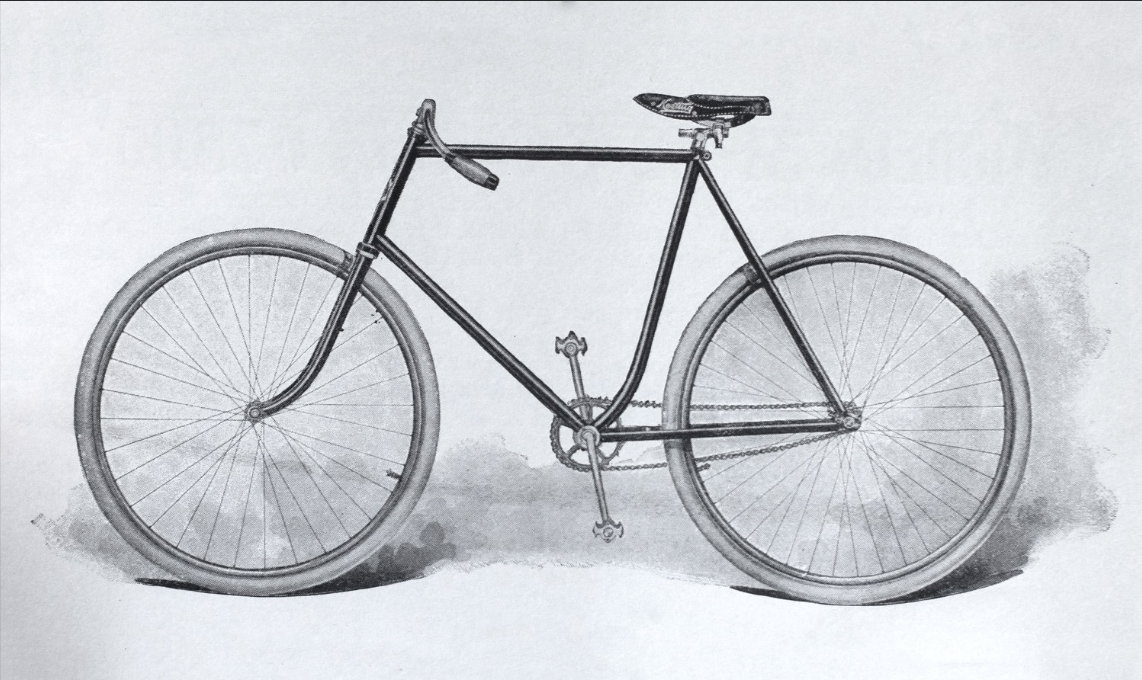
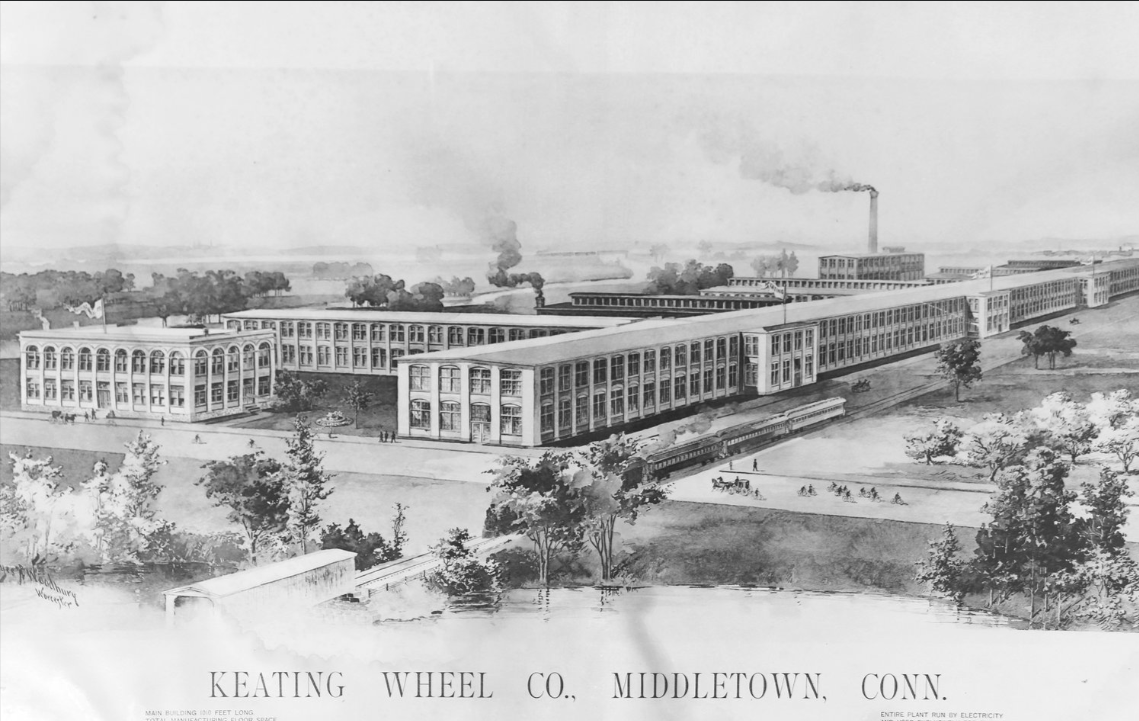
When the diamond bike frame grew popular, Keating invented a new form (and brand) of bicycle. Keating would set up a manufacturing shop, first in Springfield in the brand new Whitcomb building, and in Holyoke and then later in Middletown, Connecticut.

From there, he advanced to creating motorcycles, and battery operated vehicles – essentially the same technologies used by modern cycles and electric vehicles today. He also came up with better chairs and at the time of his death was perfecting a silent flush valve.
The industrial revolution is full of remarkable stories such as Keating’s. And, in this case, it overlaps with baseball. Oh – and Keating’s inventions overlapped with baseball, too.

I should mention Keating’s most famous baseball invention(s). For the longest time, home plate was stone or metal – which made sliding into home a less appealing strategy (not to mention what it did to pitches in the dirt near the plate). Keating’s first noted patent was shared with R. F. Hyde when they invented a rubber version of home plate in 1887. His advancement took a different shape around the turn of the century. Instead of being a square of a specific size, Keating invented the five sided home plate, shaped like a house and made of two pieces of rubber, that we now know and love.
Keating died after a short illness on January 19, 1922. He is buried in St. Michael’s Cemetery in Springfield. He advanced to the next league without having married or fathered children.
Notes:
1860, 1870, 1880, 1900, 1910, 1920 US Census
“Holyokes 11, Springfield 1,” Springfield Daily Republican, April 11, 1886: 1.
“Harvards 17, Amhersts 8,” Springfield Daily Republican, June 29, 1886: 5.
“List of Patents,” Boston Globe, February 16, 1887: 6.
“Echoes from the Ballfield,” Washington Evening Star, June 25, 1887: 3.
“Springfield,” Springfield Daily Republician, August 9, 1887: 6.
“Knauff Released and Keating Signed,” Baltimore Sun, August 20, 1887: 6.
“Nearly a Shutout,” Cincinnati Enquirer, August 28, 1897: 10.
“Northhampton Firemen 22; Holyoke 3,” Springfield Daily Republican, September 11, 1887: 1.
“List of Patents,” Boston Globe, October 26, 1887: 4.
“List of Patents,” Boston Globe, December 4, 1889: 6.
“List of Patents,” Boston Globe, February 6, 1890: 7.
“Features of the Bicycle Factory,” Springfield Daily Republican, December 28, 1891: 6.
“List of Patents,” Boston Globe, November 10, 1892: 9.
“Robert M. Keating, Bicycle Inventor and Maker, Dead,” Springfield Evening Union, January 20, 1922: 1.
The photos of Keating and his inventions were found here: https://www.keatingwheelcompany.com/, accessed on January 19, 2025.
 Mighty Casey Baseball
Say, hello! Leave a comment!!!